
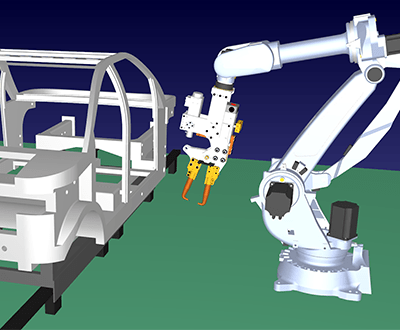
6 Things You Absolutely Need to Know About Robot Welding: Revolutionizing Your Production Line
In the fiercely competitive world of manufacturing, efficiency, consistency, and quality aren’t just goals – they’re survival requirements. Enter robot welding: a transformative technology rapidly moving from futuristic concept to shop floor necessity. If you’re considering automation or simply want to understand its impact, here are the 6 crucial things you need to know about robot welding:
1.It’s All About ROI: Unlocking Unprecedented Efficiency & Consistency
The driving force behind robot welding isn’t just novelty; it’s tangible, compelling return on investment (ROI).
Speed: Robots weld significantly faster than humans. They don’t tire, take breaks, or need shift changes. Arc-on time (the actual time spent welding) can increase dramatically, sometimes doubling or tripling output.
Flawless Consistency: Human welders, no matter how skilled, experience natural variation. Robots execute the exact same programmed path, speed, and parameters weld after weld, hour after hour. This eliminates costly rework and scrap due to inconsistencies.
24/7 Operation: Lights out? No problem. Robotic welding cells can run unattended for extended periods, maximizing equipment utilization and throughput.
Reduced Labor Costs: While requiring skilled programmers and technicians, robots reduce the number of welders needed for repetitive, high-volume tasks, freeing them for more complex or value-added work.
Material Savings: Precise control minimizes spatter and overweld, directly saving on costly consumables like wire and gas.
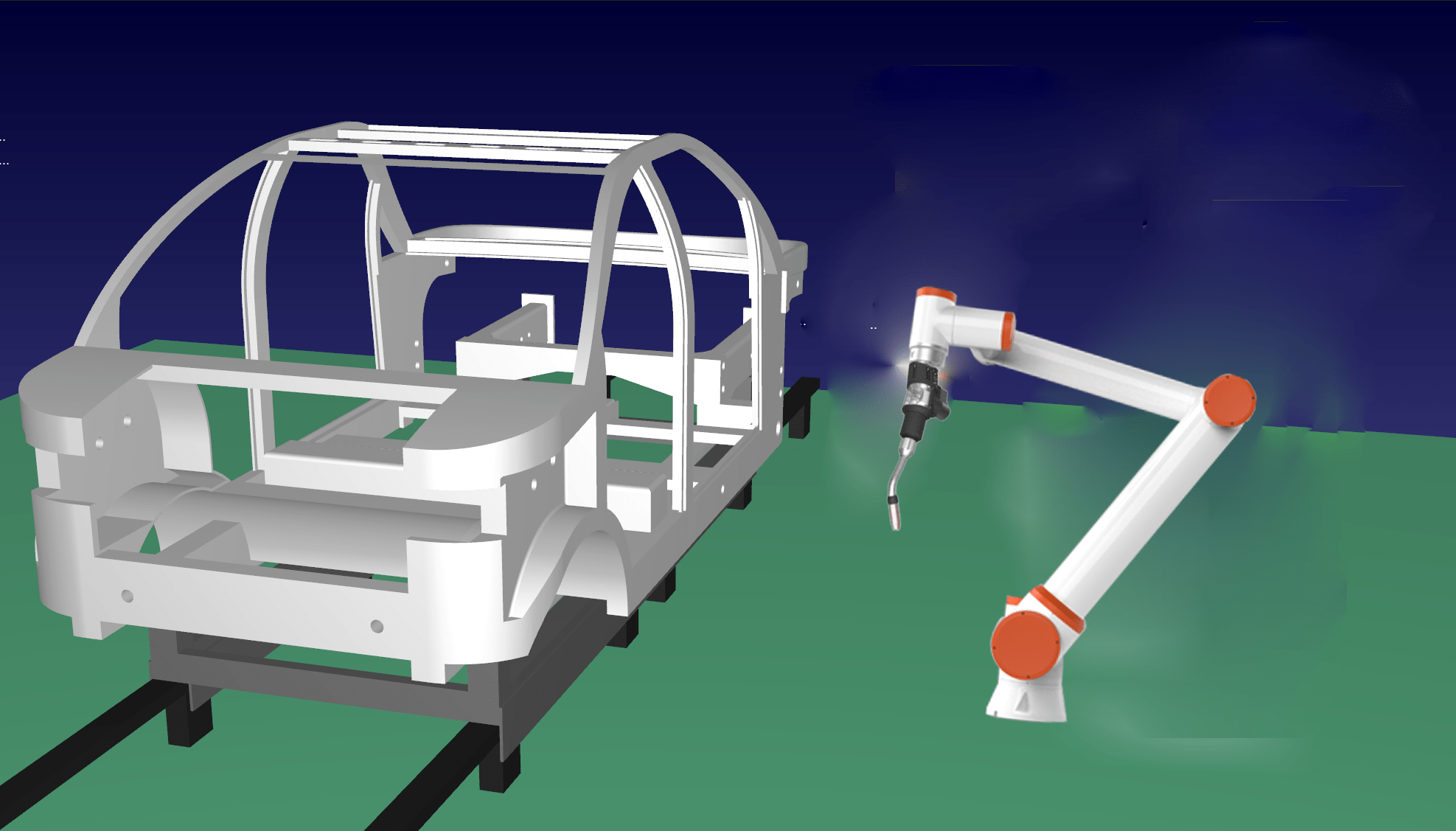
Robot welding in car factory
2.Versatility Reigns: Applications Spanning Industries
Robot welding isn’t confined to massive automotive plants. Its adaptability makes it suitable for diverse sectors:
- Automotive & Transportation: The pioneer. Used for chassis, frames, exhausts, body panels, and sub-assemblies.
- Heavy Equipment & Construction: Fabricating large, complex structures like bulldozer arms, crane booms, and excavator buckets where precision and strength are paramount.
- Aerospace: Critical for high-integrity welds on engine components, landing gear, and airframe structures demanding absolute consistency.
- Consumer Goods: Appliances (washing machine drums, oven frames), furniture (metal frames), and fitness equipment benefit from speed and uniformity.
- Industrial Machinery: Fabricating frames, bases, enclosures, and complex assemblies for various machines.
- Energy (Oil & Gas, Renewables): Pipeline components, wind turbine towers, pressure vessels, and drilling equipment.
- Fabrication Shops: Even smaller job shops leverage robots for recurring jobs or specific processes to boost capacity and competitiveness.

Welding robot
3.Choosing Your Champion: Types of Welding Robots
Not all robots are created equal. The main types suit different needs:
- Articulated Robots (The Most Common): Resembling a human arm with multiple rotary joints (typically 6-axis). Offer maximum flexibility, dexterity, and reach within their work envelope. Ideal for complex paths and accessing tight spaces.
- SCARA Robots (Selective Compliance Assembly Robot Arm): Feature 4 axes (3 rotary, 1 linear). Excel at fast, precise movements in a horizontal plane. Best suited for simpler, high-speed applications like small part welding or spot welding where vertical compliance is beneficial.
- Cartesian/Gantry Robots: Built on linear axes (X, Y, Z), forming a rectangular work envelope. Provide exceptional rigidity, accuracy, and high payload capacity. Perfect for very large parts (e.g., shipbuilding, large structural beams) or applications needing extreme precision over large areas.
- Collaborative Robots (Cobots): Designed to work safely alongside humans without traditional safety cages (under specific conditions). Easier to program and deploy, often used for lower-volume, higher-mix production or assisting human welders with repetitive tasks. Payload and reach are typically smaller than industrial robots.
4.Beyond the Arm: Essential Hardware & Software Components
A robot welding system is more than just the robot:
- The Robot Controller: The “brain.” Executes programs, controls motion, manages inputs/outputs, and interfaces with peripherals.
- Welding Power Source: Provides the electrical energy for the arc (MIG/MAG, TIG, Spot, Laser, Plasma). Must be compatible and often integrated via communication protocols (Ethernet/IP, DeviceNet).
- Wire Feeder (for MIG/MAG): Precisely delivers filler wire to the torch.
- Welding Torch: The tool performing the weld. Requires robust design to withstand heat and spatter. Needs regular maintenance and consumables (tips, nozzles, liners).
- Torch Cleaning Station (Reamer): Essential for automated operation. Cleans spatter from the torch nozzle automatically between cycles or during pauses.
- Work Positioning (Positioners & Turntables): Moves the workpiece into the optimal position for the robot, drastically simplifying programming and improving weld quality. Crucial for complex parts.
- Safety Systems: Fencing, light curtains, safety scanners, and emergency stops to protect personnel.
- Programming Software: The interface for creating, simulating, and optimizing weld paths and parameters. Offline Programming (OLP) software allows programming without stopping production.
- Sensors (Optional but Powerful): Laser seam tracking adjusts the robot path in real-time to follow joint variations. Touch sensing locates joints precisely. Vision systems can identify part position.
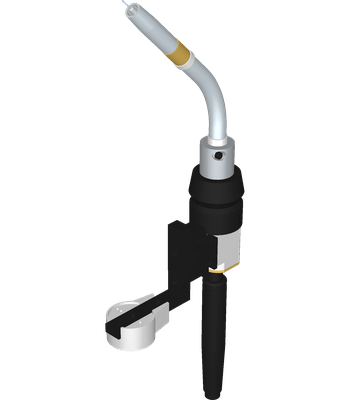
Welding gun
5.The Path to Automation: Key Implementation Steps & Considerations
Successful deployment requires careful planning:
- Feasibility Study & ROI Analysis: Identify suitable applications, calculate potential savings (labor, material, quality), and estimate costs (robot, peripherals, integration, training).
- Part & Process Analysis: Can parts be consistently presented? Are weld joints accessible? Is fixturing feasible? Is the welding process suitable for automation?
- Cell Design & Integration: Design the physical layout, select the right robot type, positioner, safety systems, and peripherals. This often involves specialized integrators.
- Fixture Design: Critical! Fixtures must hold parts accurately and repeatably within the robot’s reach. Poor fixturing is a major cause of failure.
- Programming & Path Teaching: Creating the robot’s motion paths and welding parameters. OLP is increasingly vital for efficiency.
- Testing & Optimization: Run sample parts, refine programs, optimize cycle times, and ensure quality.
- Operator & Technician Training: Essential for safe operation, basic troubleshooting, and maintenance.
- Maintenance Plan: Robots require regular preventative maintenance (lubrication, calibration, torch inspection).
6.Humans & Robots: Collaboration is Key
Robots are powerful tools, but they don’t replace human expertise:
- Programming & Maintenance Skills: The biggest shift is in workforce skills. You need skilled robot programmers, technicians, and maintenance personnel. Investing in training is non-negotiable.
- Initial Investment: While ROI is strong, the upfront cost for the robot, peripherals, integration, and fixturing can be significant. Careful planning and justification are essential.
- Part Consistency & Fixturing: Robots demand consistency. Variations in part fit-up or poor fixturing will lead to bad welds. Robust quality control upstream is vital.
- Flexibility vs. Dedication: While becoming more flexible, robots are still most efficient on dedicated, repetitive tasks. High-mix, low-volume scenarios require careful assessment, often favoring cobots.
- Safety First: Implementing comprehensive safety protocols and physical safeguards is paramount. Never underestimate the power and speed of an industrial robot.
- The Human Edge: Humans excel at complex problem-solving, adapting to unforeseen variations, intricate custom work, and overseeing the automated process. The future is collaborative.
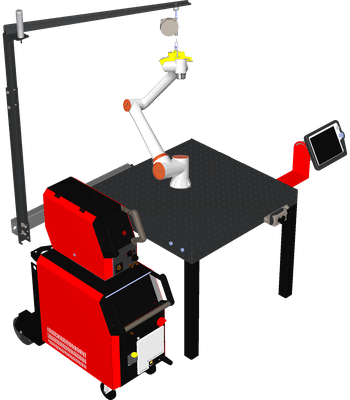
Welding workstation
Conclusion: Welding’s Automated Future is Now
Robot welding is no longer a luxury reserved for giants; it’s an accessible, proven technology delivering unmatched productivity, quality, and cost savings across industries of all sizes. Understanding these 6 core aspects – the compelling ROI, vast application potential, different robot types, essential system components, critical implementation steps, and the evolving human-robot partnership – provides the foundation for making informed decisions.
Whether you’re looking to boost capacity, conquer quality challenges, reduce costs, or stay competitive, robotic welding offers a powerful solution. The question isn’t if you should explore automation, but when and how to strategically integrate it into your welding operations to forge a stronger, more efficient future for your business.