
How Global Supply Chain Challenges Are Forging a New Era of Operational Resilience Through Automation
If the last few years have taught us anything, it’s that the global supply chain is both a marvel of modern engineering and a surprisingly fragile entity. A pandemic, a ship stuck in a canal, geopolitical tensions, or a sudden spike in consumer demand—any of these factors can trigger a cascade of delays, shortages, and skyrocketing costs that ripple across the world almost overnight.
For decades, the prevailing business model prioritized leanness and just-in-time inventory. But this efficiency came at a cost: a startling lack of buffer against disruption. Today, the conversation has decisively shifted. The new imperative is no longer just about being lean; it’s about being strong, adaptable, and resilient. This is where automation, once considered a mere tool for reducing labor costs, is emerging as the cornerstone of a new strategy. The ongoing global supply chain challenges are not just problems to be solved; they are powerful catalysts, accelerating the adoption of automation to build what we call Operational Resilience.
What is Operational Resilience, Really?
Before we dive deeper, let’s define our key term. Operational Resilience is the ability of an organization to anticipate, prepare for, respond to, and adapt to incremental changes and sudden disruptions in order to continue operating and deliver on its business objectives.
It’s more than just bouncing back; it’s about bouncing forward. It’s the difference between a company that survives a storm and one that uses the storm to learn how to build a better ship. In the context of supply chains, resilience means:
- Predicting potential bottlenecks before they become full-blown stoppages.
- Absorbing shocks without a complete breakdown in service.
- Adapting processes quickly when a primary supplier fails or a shipping route closes.
- Evolving the entire operation to be more robust for the next inevitable challenge.
Automation is the engine that powers this resilience.
The Perfect Storm: Labor Shortages and Supply Disruptions
The push towards automation is being fueled by a “perfect storm” of two interconnected crises:
- Chronic Labor Shortages: From warehouse pickers to truck drivers, many logistics and manufacturing sectors are facing a severe and persistent labor gap. This isn’t a temporary blip; it’s a structural shift driven by demographic changes and shifting workforce aspirations. Businesses simply cannot find enough people to staff their operations at the scale required.
- Unpredictable Supply Disruptions: The era of reliable, two-week shipping from a factory overseas is over. Companies are now dealing with constant unpredictability. Relying on a single, distant source for components is a high-risk strategy, as lockdowns or trade disputes can halt production for months.
This storm exposes the fatal flaw of the old, purely manual, and hyper-efficient model: it lacks flexibility. When you’re operating with minimal staff and razor-thin inventories, any single point of failure can bring the entire system to a halt.
How Automation Builds Operational Resilience, Step by Step
Companies are turning to a suite of automated technologies to reinforce their supply chains at every vulnerable point. Here’s how it works in practice:
- In the Warehouse: From Manual Sorting to Intelligent Fulfillment Hubs
The warehouse is no longer just a storage space; it’s the dynamic heart of the modern supply chain. Automation is transforming it into a resilient nerve center.
- Automated Guided Vehicles (AGVs) and Autonomous Mobile Robots (AMRs): These robots move shelves of goods to human pickers, or even pick items themselves, drastically reducing walking time and fulfilling orders 2-3 times faster than manual systems. When order volumes spike, you don’t need to scramble to hire and train temporary staff; you can deploy more robots or increase their operating hours.
- Smart Inventory Management Systems: Using IoT sensors and RFID tags, these systems provide real-time, accurate visibility into stock levels. This prevents both overstocking (tying up capital) and stockouts (losing sales). The system can even automatically trigger purchase orders when inventory falls below a certain threshold, creating a self-regulating buffer.
- Resilience Benefit:_ Your fulfillment operation becomes scalable and less dependent on a large, variable human workforce. You can maintain high throughput 24/7, regardless of labor market conditions.
- In the Factory: From Rigid Assembly Lines to Adaptive Production Cells
Manufacturing is undergoing a revolution, moving away from Henry Ford-era fixed assembly lines.
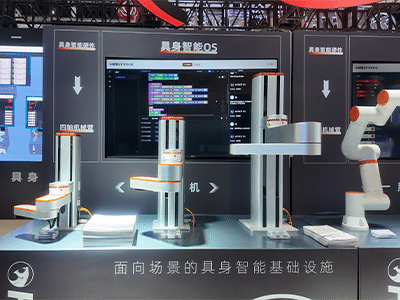
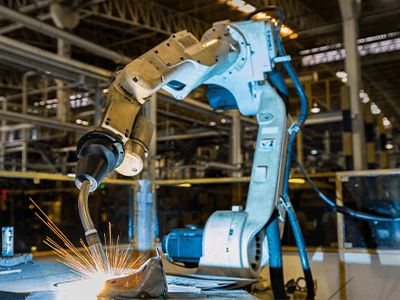
- Collaborative Robots (Cobots): Unlike massive, caged industrial robots, cobots are designed to work safely alongside humans. They can be quickly reprogrammed and redeployed for different tasks. If a key component for Product A is stuck on a ship, a manufacturer can swiftly reassign cobots to assist in the production of Product B, which uses available parts.
- Additive Manufacturing (3D Printing): For critical, low-volume parts, 3D printing is a game-changer for resilience. Instead of waiting months for a spare part from an overseas supplier, a company can print it on-site in a matter of hours. This dramatically reduces dependency on complex international logistics for essential components.
- Resilience Benefit:_ Production becomes agile and flexible. You can pivot your manufacturing output rapidly in response to material availability, reducing downtime and lost production capacity.

- In the Planning Office: From Reactive Guessing to Proactive Decision-Making
The most significant form of automation might be invisible—it’s in the software.
- AI-Powered Demand Forecasting: Advanced algorithms analyze vast datasets—including sales history, market trends, weather patterns, and even social media sentiment—to predict future demand with far greater accuracy than human planners. This allows companies to build strategic inventory buffers for products likely to be in high demand.
- Digital Twins: Companies are creating virtual replicas (“digital twins”) of their entire supply chain. They can run simulations on this model to see how it would react to a hurricane in Southeast Asia or a port strike. This allows them to identify weaknesses and test contingency plans before a real-world disruption occurs.
- Resilience Benefit:_ You shift from a reactive posture (“How do we fix this crisis?”) to a proactive one (“How do we prepare for potential crises?”). This foresight is the ultimate competitive advantage in a volatile world.
The Human Element: Augmenting, Not Replacing
A common fear is that automation will lead to widespread job losses. While some manual roles will evolve, the primary goal of resilience-focused automation is augmentation. Automation handles the repetitive, predictable, and physically demanding tasks, freeing up the human workforce to focus on higher-value activities that require critical thinking, problem-solving, and creativity—like managing the automated systems, optimizing processes, negotiating with suppliers, and developing new strategies. The most resilient operations will be those that best combine human ingenuity with machine efficiency.
Conclusion: Building a Supply Chain for the Future
The global supply chain challenges of today are not a temporary anomaly; they are the new reality. In this environment, clinging to outdated, purely manual processes is a strategic risk. The businesses that will thrive are those that recognize automation not as a luxury, but as a fundamental pillar of Operational Resilience.
By investing in intelligent automation—from robotic warehouses and adaptive factories to AI-powered planning tools—companies are building supply chains that are not only more efficient but also more robust, agile, and capable of weathering the storms of the 21st century. The journey toward resilience is underway, and it is being automated, one step at a time.