
HITBOT Debuts at the Industrial Expo: Building an “Embodied Intelligence Industry”
In the industrial intelligence arena, some companies focus on individual robots, while others delve into software algorithms. However, Huiling Technology (HITBOT) has chosen a more fundamental and long-term approach—building a “software + hardware” industry foundation.
As a pioneer in the “embodied intelligence industry foundation,” HITBOT leverages the deep integration of an operating system and modular hardware to empower robots with both the “brain” (HITBOT OS)—the cognitive, comprehension, and decision-making capabilities—and the robust “body” (from robotic arms, electric grippers, to dexterous hands). This “brain + body” integration enables HITBOT to achieve a complete closed-loop intelligent entity within scenarios, integrating “thinking” and “action,” thereby facilitating the rapid implementation of research, production lines, and service scenarios.
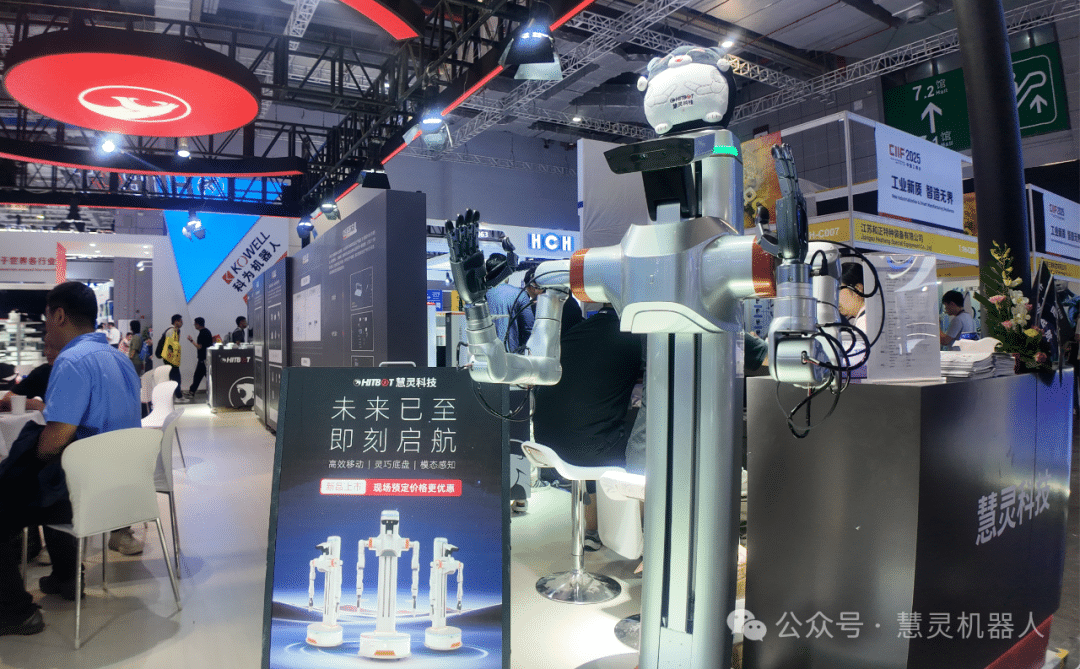
On September 23, 2025, the 23rd China International Industry Fair (CIIF) opened with great fanfare at the National Exhibition and Convention Center in Shanghai. Under the theme of “Embodied Intelligence, Collaborative Future,” HITBOT showcased its latest breakthroughs in operating systems, modular hardware, laboratory automation, humanoid robots, and dexterous hands, attracting numerous industry visitors, experts, scholars, and partners to discuss and exchange ideas, becoming a key focus of the exhibition.
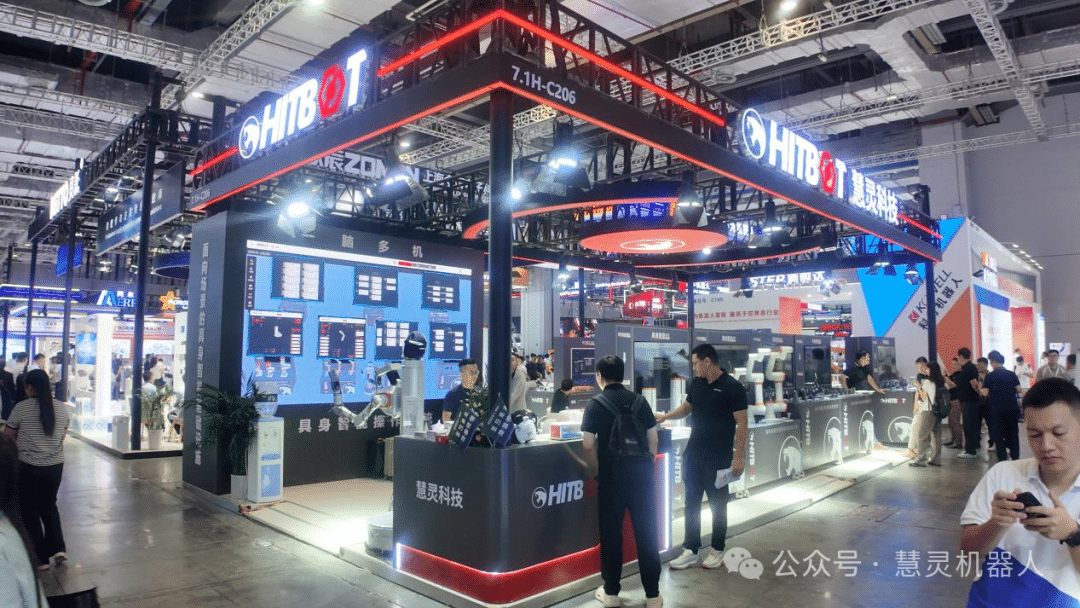
Dual-Wheel Drive: HITBOT OS Operating System + Hardware Matrix, Co-Building an Industrial Foundation
As a pioneer in the “embodied intelligence industrial foundation,” HITBOT fully demonstrated HITBOT OS for the first time at the Industrial Expo. This operating system is based on a dual-layer cognitive architecture: the “brain + cerebellum.” The “brain,” powered by distributed AI and an industry knowledge base, understands semantics, generates strategies, and integrates cross-industry process data. The “cerebellum” precisely translates decisions into hardware actions through high-precision motion control and multimodal feedback. The system comes pre-installed with over 300 common industry device protocols and features a low-code visual programming interface. Researchers and developers can quickly build processes by simply dragging and dropping modules, much like building blocks. This breakthrough not only enables intelligent agents to achieve a truly closed-loop capability from cognition to execution, but also reshapes the underlying logic of scientific research and automation. HITBOT also demonstrates a solid foundation in hardware. Its hardware portfolio covers core actuators, including four-axis and six-axis collaborative robotic arms, electric grippers, intelligent electric cylinders, and dexterous hands, providing a stable and flexible “body” chassis for the operating system. Data shows that in the actuator business alone, the company has been granted over 166 patents, and HITBOT’s four-axis collaborative robotic arms boast over 90% market share in China. From the first domestically produced integrated electric gripper to the world’s first direct-drive SCARA robotic arm, to intelligent electric cylinders, the first electric suction cup, and rotating electric grippers, HITBOT has reshaped the actuator value system with a series of pioneering and groundbreaking products, ushering in an era of universal accessibility for intelligent manufacturing.
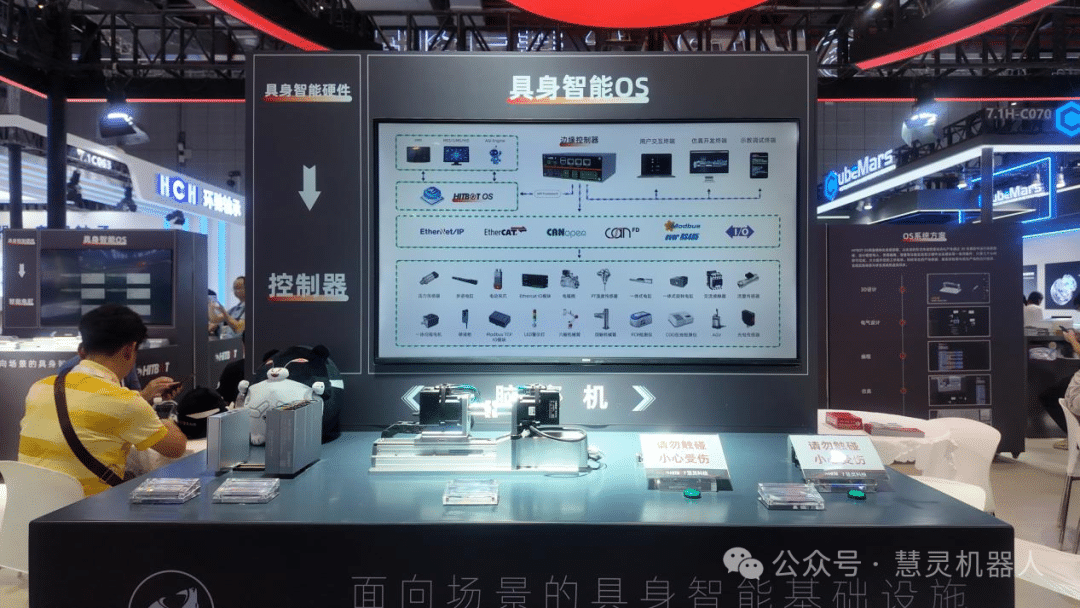
HITBOT Intelligent Body: Complete Closed-Loop Drive Implementation
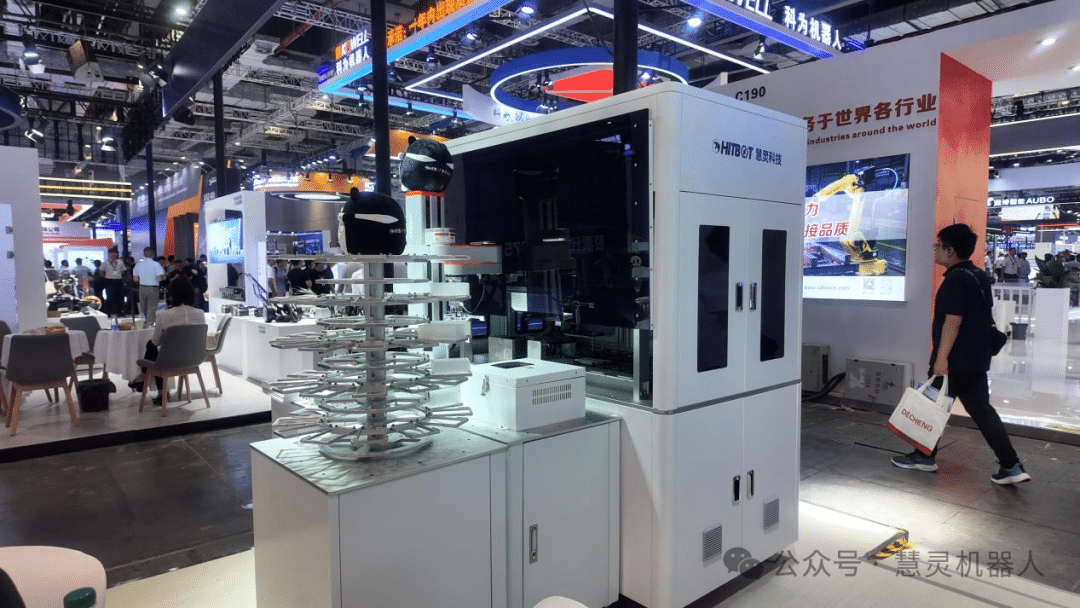
At the Industrial Expo, HITBOT showcased the application capabilities of its “intelligent body” in multiple scenarios: AI for Science (AI4S) laboratory automation: Researchers can issue commands via natural language or use graphical programming to quickly assemble experimental workflows, significantly improving R&D efficiency. The system’s open architecture is compatible with mainstream experimental equipment, allowing researchers to focus on high-value innovation.
To ensure a closed-loop scenario for intelligent agents, we are not only continuously making breakthroughs in cognition but also deploying hardware support on the execution side. We have launched products such as humanoid robots and dexterous hands, enabling intelligent agents to truly complete the closed loop from “understanding” to “action.” Humanoid Robot: The first humanoid robot prototype boasts 19 degrees of freedom, enabling natural and flexible movements. It supports modular expansion and open secondary development interfaces, expanding possibilities for scientific research, services, and complex operations. Affordable Dexterous Hand: Priced at only 2,999 yuan, the eHand-6 features five highly biomimetic fingers and a strong load capacity, bringing “high-performance dexterous hands” to the masses and providing a path for practical application in scientific research, education, and industrial innovation.

Tian Jun, founder of HITBOT, stated, “our mission is to build a truly ‘scenario-oriented embodied intelligent industrial foundation.’ We not only provide operating systems and hardware platforms, but also aim to build an open and scalable ecosystem. Through our ongoing industry exploration, we continuously accumulate data and scenario experience, embedding this knowledge into the underlying foundation. This accumulation empowers intelligent agents with portability and reusability, enabling them to more rapidly integrate into various scientific research and industrial scenarios, achieving a complete closed-loop capability from cognition to execution. We believe that the future of intelligence lies not in the accumulation of single point technologies, but in the synergy and practical value of the entire ecosystem.”
From Concept to Implementation, Empowering Industrial Upgrade
HITBOT’s presence at the Industrial Expo not only showcased its deep technical expertise in operating systems and hardware, but also demonstrated its strategic implementation capabilities for its “scenario-oriented embodied intelligent industrial foundation.” Looking ahead, HITBOT will continue to promote the deep integration of operating systems, hardware, and application scenarios, enabling intelligent agents to transcend the conceptual level and truly enter research laboratories, industrial workshops, and everyday applications, helping to elevate industrial intelligence and scientific innovation to new heights.