
From Science Fiction to Science Fact: How Close Are We to General-Purpose Robots?
For decades, the vision of a general-purpose robots—a mechanical helper that can fold laundry, cook dinner, unload the dishwasher, and then take out the trash—has been a staple of science fiction. From Rosie the Robot in The Jetsons to the lifelike androids of Westworld, we’ve dreamed of machines that can understand and navigate our world with the same ease as a human.
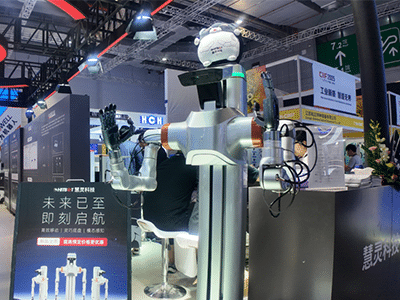
Today, that dream feels closer than ever. We see videos of humanoid robots walking through parks, and robotic arms performing delicate tasks. The line between fiction and reality is blurring. But are we truly on the brink of welcoming a general-purpose robots into our homes?
The answer is both thrilling and complex. We have made astronomical leaps in hardware, but the final, most critical gap isn’t about strength or speed; it’s about cognition. The journey to a true general-purpose robots hinges on one pivotal concept: “Common Sense.”
The “Common Sense” Gap: Why Today’s Robots Are Specialists
Think about the robots already in our world. The robotic arm in a car factory is a master of welding, but it has no idea what to do with a cup of coffee. Your robot vacuum cleaner can map your entire living room but can’t understand that a pair of socks left on the floor is an obstacle to be picked up, not avoided.
These are specialist robots. They are brilliantly designed for specific, repetitive tasks in controlled environments. They operate on pre-programmed rules and precise sensors.
General-purpose robots, however, must be a generalist. It needs to operate in our world—the unpredictable, messy, and infinitely varied human environment. To do this, it needs a form of common sense, which is the ability to:
- Understand implicit context: Knowing that a glass is “full” means the liquid is near the top and that tilting it quickly will cause a spill.
- Transfer learning: If a robot learns to open a push-door, can it figure out a pull-door, a sliding door, or a revolving door without entirely new programming?
- Reason about physics and intuition: Understanding that a raw egg will break if dropped, but a rubber ball will bounce, and that a paper plate can be crumpled, but a ceramic one cannot.
This “common sense” is what a toddler develops by interacting with the world. It’s the missing piece that separates our current, powerful but brittle, robots from the adaptable partners of the future.
The Building Blocks of Common Sense: How We’re Bridging the Gap
The quest to instill common sense in machines is driving the most exciting research in AI and robotics today. It’s a multi-front effort, built on several key technological pillars:
- The AI Brain: From Programming to Learning
The shift from traditional programming to machine learning, particularly Deep Learning and Reinforcement Learning, has been a game-changer. Instead of being told exactly how to perform every micro-task, robots can now learn through vast datasets and simulation.
Example: A robot can watch thousands of hours of video of people opening doors, washing dishes, or folding shirts. From this, it doesn’t learn to copy one exact motion, but begins to build an internal model of how objects interact, gravity works, and what the “goal” of a task looks like. This is the foundation of common sense.
- The Simulation Playground: Trial and Error at Lightspeed
Training a physical robot is slow, expensive, and risky. What if it could make its mistakes in a digital world? Advanced physics simulators are now used to train robot “brains.” A robot can practice walking on ice, navigating a cluttered kitchen, or handling delicate objects millions of times in a simulation, compressing years of real-world trial and error into days. This allows it to develop robust strategies for the real world’s chaos.
- Embodied AI: Learning by Doing
This is a crucial concept. An AI that can beat a grandmaster at chess is intelligent, but it doesn’t understand the physical world. Embodied AI is the field of study where intelligence is developed through a physical body (a robot) interacting with a physical environment. It’s the difference between reading about how to ride a bike and actually getting on one. This direct sensory feedback loop (see, act, feel the consequence) is essential for building genuine common sense.
- The Hardware Revolution: The Body Catches Up with the Brain
While software is the key, hardware is the lock. We are seeing incredible advances:
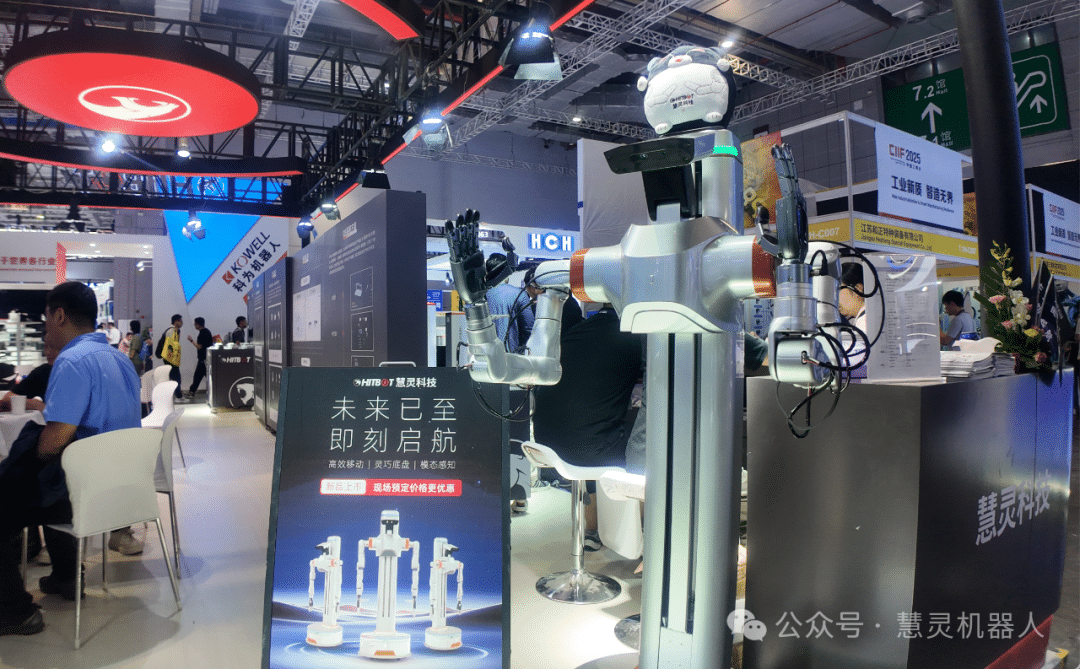
Robotic Hands (The “Spaghetti Problem”): Picking up a rigid screwdriver is easy. Picking up a piece of cooked spaghetti without crushing it is incredibly difficult. New, sensor-rich tactile hands are being developed that can feel pressure, texture, and slip, allowing for the delicate, nuanced manipulation that human hands take for granted.
Humanoid Form: Why build humanoid robots? Because our world is built for humans. Stairs, doorknobs, and tools are all designed for our bipedal, two-armed, five-fingered bodies. A general-purpose robot designed to operate in our homes, offices, and cities will likely need a human-inspired form to navigate these spaces effectively.
So, How Close Are We? The Realistic Timeline
This is the million-dollar question. The progress is real, but we are likely on a decade-long journey, not a year-long one.
Now (The “Demo” Stage): We are in the era of impressive, curated demonstrations. Robots can perform a series of stunning tasks, but often in controlled settings. They are brittle—a small change in the environment can cause failure. They are the equivalent of the first computers: room-sized, powerful for specific calculations, but nowhere near the personal computer revolution.
The Next 5-7 Years (The “Useful Assistant” Stage): We will see the rise of robots that are genuinely useful in structured commercial environments—think warehouses, hospitals, and factories. They will handle a wider variety of “de-tasked” jobs, like moving boxes of different sizes, sorting items, or assisting with logistics. They will still require some human oversight and will operate in semi-controlled spaces.
The Next Decade and Beyond (The “Home Helper” Stage): The true general-purpose robots is the final frontier. The home is the most complex and unpredictable environment of all. Reaching the reliability and safety needed for an affordable robot to handle the infinite variety of a household is the ultimate challenge. It will require not just incremental improvements, but likely new breakthroughs in AI architecture.
Conclusion: The Partnership, Not The Replacement
The goal of general-purpose robots is not to create a replacement for humanity, but a partner. These machines will take over the dull, dirty, and dangerous tasks, freeing us to focus on creativity, connection, and innovation.
The path from science fiction to science fact is being paved not by a single magical invention, but by the steady, collaborative march of progress in AI, simulation, and hardware engineering. The key that will unlock the final door is “common sense”—and while it remains the hardest problem to solve, the world’s brightest minds are closer than ever to cracking the code.
The age of general-purpose robots isn’t here yet, but for the first time, we can see its silhouette clearly on the horizon.