
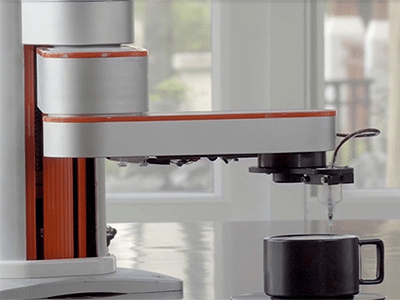
Why Direct-Drive SCARA Robots are the Ultimate Tool for Research and Education
In the dynamic worlds of scientific research and engineering education, the tools you use can either limit your potential or unlock new frontiers of discovery. For decades, complex, proprietary robotic systems have often been a barrier. But a technological shift is changing everything. Enter the Direct-Drive SCARA Robot—a breed of automation that is rapidly becoming the gold standard for universities, research labs, and teaching facilities. Its unique design isn’t just an incremental improvement; it’s a fundamental rethinking of what a robot can be for innovators and learners. This article explores why the direct-drive SCARA is the ideal partner for your next groundbreaking experiment or curriculum.
## The Unmatched Advantage of Direct-Drive Technology
To understand why this robot is a game-changer, we must first look under the hood. Traditional robots often use mechanical transmission systems, like gears or reduction belts, to transfer power from the motor to the joint. While effective for some industrial tasks, these components introduce significant drawbacks for precision work.
Direct-Drive, as the name implies, eliminates all of that. The motor’s rotor is directly attached to the robot’s arm, creating a 1:1 connection. This simple yet profound architectural difference delivers a suite of benefits that are perfectly aligned with the needs of research and education.
- Unparalleled Precision and Zero Backlash
The Problem with Gears: In geared systems, there is always a tiny amount of “play” or “backlash” between the teeth of the gears. This means when the motor reverses direction, the arm doesn’t move immediately, causing a small but critical error. In tasks like micro-assembly or high-accuracy positioning, this is unacceptable.
The Direct-Drive Solution: With no gears or belts, backlash is completely eliminated. The motion is crisp, immediate, and perfectly faithful to the motor’s command. This provides the sub-micron level precision required for advanced research in fields like photonics, semiconductor testing, and biotechnology.
- Exceptional Smoothness and Clean Operation
The Problem of Particulates: Mechanical components wear down over time, releasing microscopic metal or plastic particles. In a cleanroom environment for electronics manufacturing or life sciences, this contamination can ruin sensitive samples or delicate components.
The Direct-Drive Solution: Without wearing parts like gears, the robot itself generates no particulates. Furthermore, the motion is exceptionally smooth and vibration-free, protecting fragile items like silicon wafers, glass substrates, or biological samples.
3. Simplified Control and High Responsiveness
The Complexity of Transmission Systems: Gears and belts introduce non-linearities and friction, making the robot’s dynamics complex to model and control. For a researcher or student trying to implement advanced control algorithms, this adds an unnecessary layer of difficulty.
The Direct-Drive Solution: The dynamics of a direct-drive arm are remarkably simple and linear. What you model is what you get. This high responsiveness and fidelity make it the perfect platform for developing and testing cutting-edge control theories, machine learning algorithms, and real-time path planning.
Key Applications in Scientific Research
The unique capabilities of direct-drive SCARAs make them indispensable in a variety of advanced research fields.
Life Sciences and Bio-engineering:
- High-Throughput Screening: Rapidly and accurately moving microplates between analyzers, incubators, and dispensers.
- PCR Setup & Liquid Handling: Performing sub-microliter liquid transfers with extreme precision and no risk of contamination.
- Cell Manipulation & Micro-injection: Using the robot’s smooth motion to manipulate individual cells or embryos under a microscope.
Photonics and Semiconductor Research:
- Fiber Optic Alignment: The zero-backlash and high precision are critical for aligning tiny optical fibers to lasers or waveguides to achieve maximum light coupling efficiency.
- Wafer Probing and Inspection: Automating the testing of microchips on a wafer with pinpoint accuracy.
Advanced Materials and Nanotechnology:
- Nano-indentation: Precisely positioning a probe to test the mechanical properties of materials at the nanoscale.
- Sample Manipulation in Electron Microscopes: Integrating a compact SCARA inside or near a microscope chamber to manipulate samples with extreme steadiness.
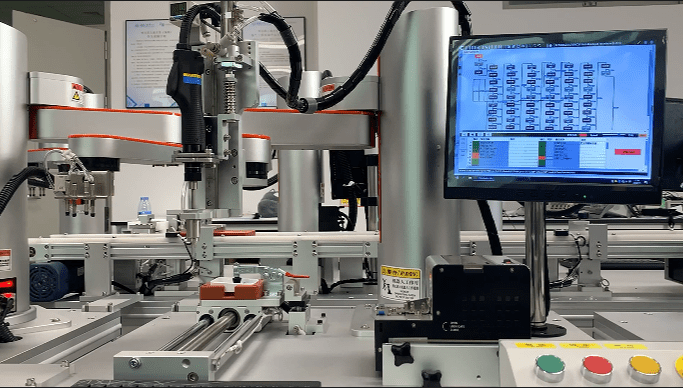
Revolutionizing Engineering Education
For educators, the direct-drive SCARA is more than just a tool; it’s a comprehensive teaching platform.
Lower Barrier to Entry: With simpler mechanics and often more intuitive software APIs, students can start programming meaningful tasks quickly, moving from theory to practice without getting bogged down by mechanical complexities.
Perfect for Teaching Core Concepts:
- Robotics Kinematics: The simple, direct joint connection makes it easier for students to visualize and calculate forward and inverse kinematics.
- Control Theory: The linear dynamics provide an ideal “test bench” for implementing PID controllers, state-space control, and other advanced methods.
- Machine Vision: Students can easily integrate cameras for tasks like object recognition, pick-and-place, and precise guidance.
- Hands-On Project-Based Learning: Students can engage in real-world projects, such as designing an automated cell culture system, building a miniature assembly line, or creating an art installation with precise motion—all on a platform that mirrors what they will encounter in high-tech industries.
- Bridging the Academia-Industry Gap: By training on state-of-the-art direct-drive technology, students graduate with hands-on experience in the very systems that are driving innovation in automation, making them highly valuable to future employers.
Choosing the Right Direct-Drive SCARA for Your Lab or Classroom
When evaluating a robot for research or education, look for these key features:
- Open Architecture & Software API: Ensure the robot comes with a well-documented API (e.g., in Python, C++, or MATLAB) that allows for low-level control and integration with other lab equipment.
- Ease of Integration: Look for a compact design, standard mounting options, and easy-to-use interfaces for I/O and sensors.
- Safety Features: Speed and force limiting, soft limits, and a lightweight structure are crucial for safe operation in a shared environment with students.
- Support and Documentation: Choose a manufacturer that provides strong technical support, comprehensive tutorials, and curriculum resources to help you and your students succeed.
Conclusion: Investing in the Future of Innovation
The direct-drive SCARA robot represents a perfect synergy of mechanical elegance and practical performance. It removes the traditional barriers of robotic complexity, offering researchers the precision and cleanliness they demand, while giving educators a powerful, accessible platform to inspire the next generation of engineers and scientists.
By choosing a direct-drive SCARA, you are not just purchasing a piece of equipment; you are investing in a foundational technology that will enable discovery, foster learning, and accelerate innovation for years to come.
Ready to empower your research or transform your robotics curriculum? Explore our high-precision, direct-drive SCARA robot solutions and see how we can help you achieve your goals. Contact our team for a custom consultation today.