
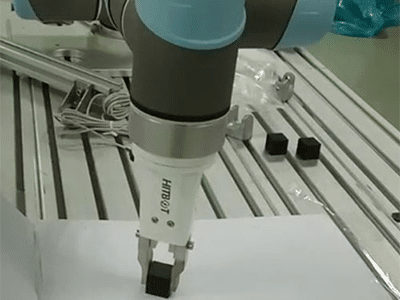
What’s the control principle of electric gripper?
The Invisible Intelligence: Mastering Electric Gripper Control Principles for Smarter Automation
Electric grippers have revolutionized robotic end-of-arm tooling, replacing traditional pneumatics with precision, programmability, and data-driven intelligence. But what transforms electric motors into dexterous “hands” capable of handling everything from fragile eggs to heavy engine blocks? The answer lies in their sophisticated control principles. Understanding these principles isn’t just technical – it’s key to selecting the right gripper, maximizing uptime, ensuring product quality, and unlocking new levels of automation flexibility.
Why Electric Gripper Control Matters (More Than You Think)
- Precision Handling: Delicate parts demand gentle, repeatable force.
- Flexible Production: Quick changeovers require adaptable grip force/speed.
- Process Control: Real-time data on grip status improves traceability.
- Energy & Maintenance Savings: Eliminate compressors and air leaks.
- Cobot Compatibility: Essential for safe, responsive collaborative work.
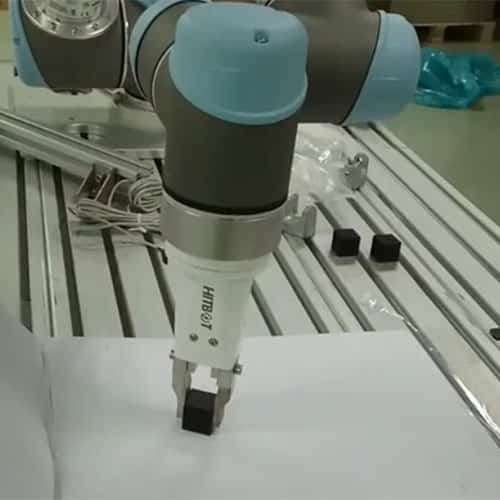
The control principle of electric gripper involves the precise manipulation of electrical signals to regulate the gripping force and movement. At its core, the electric gripper control system uses sensors to monitor the position and force applied by the gripper. These sensors provide feedback to the controller, which adjusts the motor to ensure consistent gripping force. The key control principle of electric gripper is based on a closed-loop system, where the feedback ensures the gripper’s movement is in line with the desired task. Additionally, the control system can be programmed to adapt to different objects, offering versatility and precision in handling diverse materials.
The Core Control System Architecture
Imagine the gripper control as a nervous system:
- The Brain: Controller (PLC/Robot Controller/Gripper’s Internal Controller):
Generates commands: “Close to 25mm position,” “Apply 40N force,” “Open at max speed.”
Processes feedback from sensors.
Executes complex motion profiles.
- The Nerves: Communication Interface:
Digital I/O: Simple signals (Open/Close, Grip Confirmation).
Fieldbus (EtherCAT, PROFINET, Ethernet/IP): High-speed, deterministic control for precise positioning and force.
Analog Signals: Less common, for proportional control.
Internal Microcontroller: (Smart Grippers) Handles low-level control locally.
- The Muscles: Drive Electronics & Motor:
Drive Electronics: Amplifies low-power signals to power the motor. Manages motor commutation (for brushless DC motors).
Motor: Converts electrical energy to mechanical motion (rotary or linear). Types include:
Brushed DC: Simple, cost-effective.
Brushless DC (BLDC): Higher efficiency, power density, lifespan.
Stepper: Precise positioning, open-loop control possible (less common for primary gripping force).
- The Feedback Loop: Sensors (The Critical Element):
Position Sensors (Encoders, Potentiometers, Hall Effect): Measure jaw position accurately. Essential for closed-loop control.
Force/Torque Sensors (Strain Gauges, Current Monitoring): Directly measure grip force or infer it via motor current.
Current Sensors: Monitor motor load, crucial for force control and overload detection.
Demystifying Key Control Principle of Electric Gripper
- Position Control (The Foundation):
Goal: Move jaws to a specific, repeatable opening width (e.g., 15mm, 40mm, fully closed).
How it Works:
Controller sends target position command.
Position sensor provides real-time feedback.
Closed-Loop Control (Usually PID): Compares target vs. actual position.
Proportional (P): Force applied proportional to position error.
Integral (I): Eliminates steady-state error (e.g., holding position against slight springback).
Derivative (D): Damps oscillations for smoother stopping.
Drive adjusts motor power based on PID output.
Use Case: Precise part placement, handling parts of consistent size, centering applications.
- Speed Control:
Goal: Move jaws at a specific, controlled velocity (e.g., fast open for cycle time, slow close for delicate handling).
How it Works:
Often integrated within position control profiles.
Controller commands a velocity profile (e.g., trapezoidal: accelerate, constant speed, decelerate).
Uses feedback (position change over time or dedicated tachometers) to maintain commanded speed.
PID loop acts on velocity error.
Use Case: Optimizing cycle time, preventing part damage from impact, synchronized motion with robot.
- Force Control (The Game Changer):
Goal: Apply a specific, controlled force to the part (e.g., 20N grip force).
Methods:
Direct Force Feedback (Best): Uses integrated force sensors in jaws/fingers. Provides highly accurate, real-time force measurement. Controller runs a PID loop on force error.
Current-Based Force Estimation (Common): Measures motor current (proportional to torque). Calibrated to infer grip force. Less accurate than direct sensing (affected by friction, temperature) but cost-effective. Controller runs PID loop on current/force error.
How it Works (Closed-Loop Force):
Controller sends target force command.
Force sensor (or current monitor) provides feedback.
PID control adjusts motor power to achieve and maintain the target force, compensating for part movement or deformation.
Use Case: Handling fragile items (eggs, glass, PCBs), compliant parts (rubber, plastic), press-fit assembly, ensuring consistent hold without crushing.
- Adaptive Gripping / Force-Limited Position Control:
Goal: Close jaws until a specific force is encountered, then hold position. Or, close to position but limit max force.
How it Works: Combines position and force control.
Scenario 1 (Find Part): Jaws close under position control until a preset force threshold is detected (meaning they’ve touched the part). They then switch to force control to apply the desired grip force, maintaining position unless the part moves.
Scenario 2 (Safe Close): Jaws close under position control, but the controller continuously monitors force/current. If force exceeds a safe limit before reaching the target position (e.g., hitting an obstruction), the jaws stop or retract, preventing damage.
Use Case: Tolerating part position/orientation variance, preventing damage from jams or over-gripping, handling parts with unknown exact dimensions.
- Mastering Motion Profiles:
Goal: Control how the jaws move between positions – acceleration, deceleration, maximum speed.
Profiles:
Trapezoidal: Constant acceleration → constant velocity → constant deceleration. Most common, efficient.
S-Curve: Smoother acceleration/deceleration phases (ramp up/down gradually). Reduces vibration, jerk, and stress on parts/gripper mechanism. Ideal for delicate handling and high precision.
Impact: Smoother profiles reduce part shift/vibration upon contact, improve settling time, minimize mechanical wear, and enhance delicate handling capability.
Advanced Control Techniques & Intelligence
- Internal Control (Smart Grippers):
Embedded microcontrollers handle low-level control (PID loops, motion profiles) locally.
Benefits: Faster response, reduced communication load on main controller, standardized behavior. Main controller sends high-level commands (e.g., “Grip at Position X with Force Y”).
- State Monitoring & Diagnostics:
Control systems continuously monitor:
- Current Draw: Detects overloads, stalls, unexpected resistance (indicating jam, wear, or wrong part).
- Position Error: Flags excessive error (mechanical issue, obstruction).
- Temperature: Prevents motor/drive overheating.
- Proactive Alerts: Can trigger maintenance warnings before failure (predictive maintenance).
- Safe Control for Cobots:
- Force & Speed Monitoring: Critical for safety. Gripper controller constantly checks applied force and closing speed against safety limits defined in standards (e.g., ISO/TS 15066).
- Safe Torque Off (STO): Immediate power cut-off to motor upon safety signal.
- Safe Limited Speed (SLS)/Safe Limited Force (SLF): Ensures operation stays within safe collaborative parameters.
- Programmable Logic & Sequencing:
Advanced grippers allow internal sequencing (e.g., “Close to Position A → Apply Force B → Wait 0.5s → Open to Position C”). Simplifies robot programming.
Why Understanding Gripper Control Principles Benefits YOU
- Selecting the Right Gripper:
- Need precision positioning? Prioritize high-resolution encoders and position control performance.
- Handling fragile items? Force control (preferably with direct sensing) is non-negotiable.
- High-speed cycling? Look for high-bandwidth communication (EtherCAT) and powerful servo control.
- Cobot application? Verify certified safe control features.
- Optimizing Performance & Quality:
- Tune Motion Profiles: Adjust acceleration/deceleration to minimize part vibration and cycle time.
- Set Precise Force Limits: Eliminate damaged parts from over-gripping.
- Leverage Adaptive Gripping: Increase tolerance to part variation, reducing fixturing costs.
- Use Diagnostics: Proactively schedule maintenance, reduce unplanned downtime.
- Troubleshooting Effectively:
- Gripper not closing fully? Check position feedback and mechanical obstruction.
- Inconsistent grip force? Investigate force sensor calibration, current sensing, or mechanical wear.
- Gripper stalling? Analyze current draw logs for overloads or drive issues.
- Excessive vibration? Adjust motion profile (use S-curve) or servo tuning.
- Enabling Smarter Automation:
- Process Data Logging: Record grip force profiles for quality traceability (e.g., proving a part was assembled correctly).
- Adaptive Processes: Use real-time grip feedback to adjust robot paths or downstream processes.
- Seamless Integration: Understand communication protocols for faster setup with PLCs/robots.
The Future: Smarter, More Adaptive Control
Electric gripper control is evolving rapidly:
- AI-Powered Optimization: Self-tuning PID loops based on load and conditions.
- Enhanced Sensory Fusion: Combining force, position, vision, and even tactile sensing for unparalleled dexterity and part recognition.
- Predictive Maintenance 2.0: AI analyzing vibration, current, and temperature patterns for highly accurate failure prediction.
- Simplified Programming: Intuitive interfaces using “teach by demonstration” for force and motion profiles.
Conclusion: Control is the Key to Capability
The “muscle” of an electric gripper is its motor, but its true “intelligence” lies in its control system. From the fundamental PID loops managing position and force to advanced adaptive gripping and safety protocols, the control principle of electric gripper transform simple mechanics into versatile, reliable, and intelligent automation tools.
By understanding how electric grippers are controlled, you move beyond treating them as simple clamps. You gain the insight to:
Choose wisely for your specific application needs.
Configure precisely to maximize performance and quality.
Troubleshoot effectively to minimize downtime.
Innovate confidently by leveraging their full capabilities for smarter, more adaptive automation.
Investing in understanding thecontrol principle of electric gripper isn’t just about the gripper itself; it’s about unlocking the full potential of your robotic cell and driving tangible improvements in productivity, quality, and flexibility on your factory floor. The invisible intelligence within the gripper is your silent partner in achieving automation excellence.