
Cobots vs. Traditional Industrial Robots: Which is Right for Your Operation?
The decision to automate is a pivotal moment for any business. It promises increased efficiency, higher quality, and a stronger competitive edge. But one of the most critical questions soon follows: what type of robot is right for us?For decades, the answer was almost always the traditional industrial robot. But the rise of the collaborative robot, or cobot, has changed the game, offering a new, flexible approach to automation. This isn’t a story of one replacing the other. Instead, it’s about understanding the strengths of each to make the perfect match for your unique needs.
This guide will break down the key differences between cobots and traditional industrial robots across four crucial dimensions: Safety, Deployment Flexibility, Payload/Performance, and Application Scenarios. By the end, you’ll be equipped to make an informed choice for your operation.
-
Safety: Working Alongside vs. Working Apart
This is the most fundamental difference and the origin of the “collaborative” name.
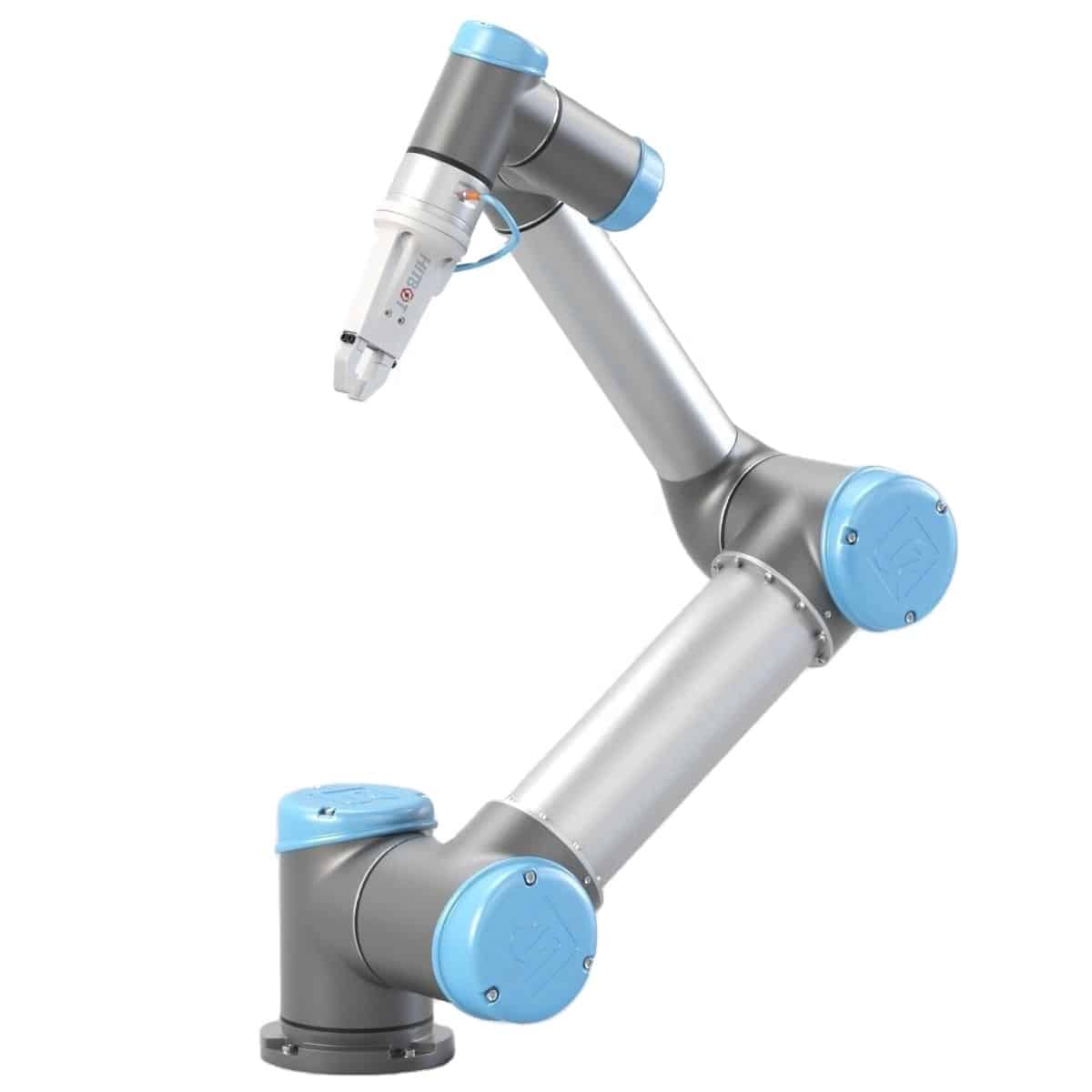
Cobots are designed from the ground up to work safely in direct proximity to human workers. They achieve this through:
- Inherently Safe Design: Rounded edges, minimized pinch points, and lightweight materials.
- Force-Limiting Technology: Built-in sensors detect unexpected contact with a person or object and immediately stop or retract, preventing injury.
- Power and Force Limitation (PFL): They operate at speeds and with a force that is considered safe for contact.
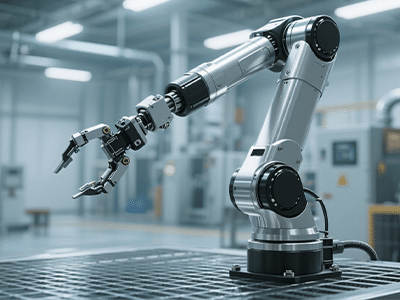
Traditional Industrial Robots are powerful, fast, and designed for a single purpose: maximum throughput. Consequently:
- They Require Safeguarding: They must operate within secured workcells surrounded by physical safety fences, light curtains, or laser scanners. These barriers protect humans by creating a strict “no-go” zone during operation.
- No Inherent Collaboration: Contact between a person and a running industrial robot is dangerous and must be prevented at all costs.
- The Verdict: If your process requires constant human interaction for part loading, unloading, or quality checks, cobots are the clear choice. If the task is fully autonomous and can be isolated, traditional robots are safe behind their fences.
-
Deployment Flexibility: Plug-and-Play vs. Fixed Infrastructure
How quickly and easily can you deploy and redeploy the robot?
Cobots are champions of flexibility.
- Ease of Programming: Most cobots use intuitive hand-guiding or simple graphical interfaces on a tablet, allowing existing shop-floor staff to program them without advanced robotics expertise.
- Mobility: Their lightweight nature means they can often be mounted on mobile carts or tables and moved between different machines or tasks on the same day—for example, running a CNC machine in the morning and a packaging station in the afternoon.
- Low Integration Cost: They often don’t require major facility changes to install.
Traditional Industrial Robots are a project.
- Complex Programming: Require skilled programmers using proprietary code (e.g., RAPID, KAREL) to program, which takes more time and specialized knowledge.
- Fixed Installation: They are heavy, bolted to the floor, and integrated into a fixed workcell. Redeploying them for a new task is a significant engineering project, not a simple move.
- High Integration Cost: Installation often involves civil works (floor mounting), extensive safety system setup, and complex integration with peripherals.
The Verdict: If you need to automate multiple, changing tasks or have limited space and engineering resources, cobots win on flexibility. For a single, high-volume, permanent application, the fixed nature of an industrial robot is not a drawback.
-
Payload and Performance: The Finesse vs. The Muscle
This is where traditional robots have historically shined, but the gap is narrowing.
Cobots typically excel in lighter-duty applications.
Payload: Standard models range from 3 kg to 20 kg (6.6 lbs to 44 lbs). While some heavy-duty cobots are emerging, they are the exception.
Speed and Reach: They are generally slower than their industrial counterparts and have a smaller reach to maintain their force-limiting safety features. They prioritize precision and delicacy over raw speed.
Traditional Industrial Robots are built for heavy lifting and high speed.
- Payload: They cover a vast range, from a few kilograms to over 2,000 kg (over 4,400 lbs), capable of handling everything of small components to entire car bodies.
- Speed and Reach: They are built for blinding speed and have a long reach, operating 24/7 to maximize output in applications where fractions of a second matter.
The Verdict: Choose a traditional robot for heavy payloads, very high-speed cycles, or large work envelopes. Choose a cobot for lighter parts, tasks requiring a delicate touch, or where absolute top speed is not the primary goal.
-
Application Scenarios: Where Each One Shines
The best way to decide is to think about the specific task.
Cobots are ideal for:
- SMEs and First-Time Automators: Lower barrier to entry.
- Human-Collaborative Tasks: Machine tending, assembly, packaging, and quality inspection where a worker is directly involved.
- High-Mix, Low-Volume Production: Easy to reprogram for frequent product changeovers.
- R&D Labs and Pilot Projects: Perfect for prototyping a process before scaling up.
Traditional Industrial Robots are ideal for:
- High-Volume, Low-Mix Production: Automotive assembly, welding, and palletizing where the task never changes.
- Heavy Payload Applications: Lifting large metal parts, automotive chassis, or heavy pallets.
- Harsh Environments: Tasks like foundry die-casting or painting that require isolation for both safety and environmental control.
- Extreme Speed: Applications like high-speed pick-and-place where every millisecond counts.
Side-by-Side Comparison Table
Feature | Collaborative Robots (Cobots) | Traditional Industrial Robots |
|---|---|---|
| Safety | Inherently safe; can work alongside people without fencing | Require safety fencing; must operate in isolation |
| Flexibility | High; easy to program and redeploy | Low; fixed installation, difficult to repurpose |
| Payload | Low to Medium (typically 3-20 kg) | Medium to Very High (up to 2000+ kg) |
| Speed | Moderate; limited for safety | Very High; built for maximum speed |
| Programming | Easy; intuitive, often by hand-guiding | Complex; requires skilled programmer |
| Integration | Quick & Low-Cost; often mobile | Lengthy & High-Cost; requires fixed infrastructure |
| Ideal For | SMEs, tasks near humans, high-mix production | Large-scale, heavy-duty, high-speed, harsh environments |
Making the Right Choice for Your Business
The question isn’t “which is better?” but “which is better for my specific operation?”
Ask yourself these questions:
- What is the payload and required speed? (Go traditional for heavy/fast)
- Will the robot need to work directly with people? (Go cobot for collaboration)
- How often will the task or product change? (Go cobot for frequent changes)
- What is my available budget and in-house expertise? (Cobots often have a lower TCO for simpler apps)
- Do I have space for safety fencing? (Go cobot if space is limited)
Sometimes, the best solution is a hybrid approach. Many modern facilities use traditional robots for the heavy, dangerous, high-speed tasks, while deploying fleets of cobots for final assembly, polishing, and inspection—the perfect collaboration of muscle and finesse.
Still unsure which path is right for you? Our automation experts are here to help. We can analyze your specific processes, requirements, and goals to recommend the perfect automation solution.
Contact us today for a free, no-obligation consultation. Let’s build the future of your operation, together.