
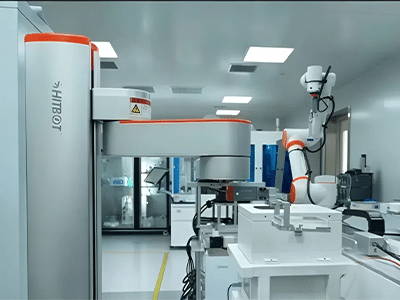
Technological Revolution in Future Scientific Laboratory
Looking at the Underlying Technological Revolution in Future Scientific Research Through the “Genesis Mission” Plan
Recently, the US government released a draft science and technology strategy called “Genesis Mission,” one of the most prominent directions of which is the construction of a new “life science research infrastructure”—training basic scientific models and leveraging AI agents and automated systems to “design experiments, automate experimental processes, run simulations, and generate predictive models,” thereby significantly accelerating the research cycle and substantially improving research efficiency, reproducibility, and data reliability. This strategy will drive the transformation of life science research from traditional manual experimental models to data-driven and intelligent closed-loop systems, enabling more rapid and accurate execution and optimization of highly complex, multivariate experiments.
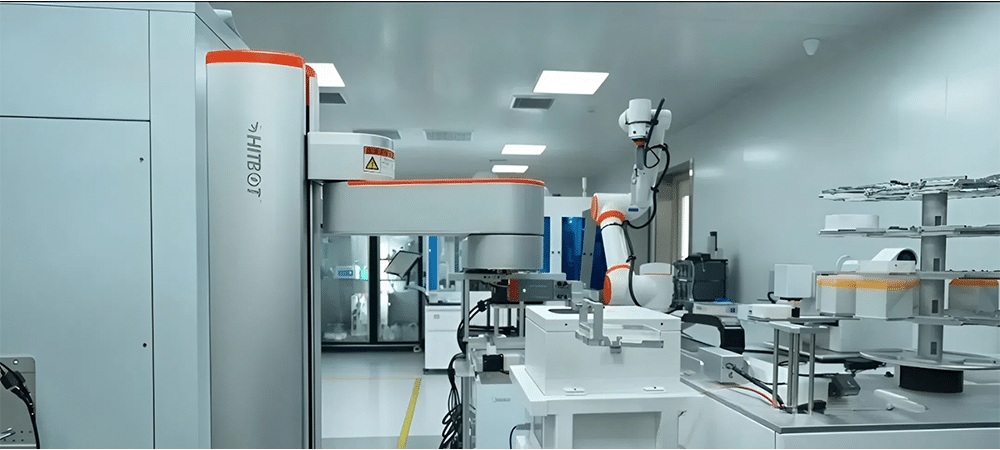
This trend is not limited to strategic documents—Chinese technology companies have already taken the lead in implementing this concept in scientific laboratory settings. In the past two years, Hitbot, based on its self-developed HITBOT OS system and modular automated hardware, has successfully implemented it in several national laboratories.
Why doesn’t factory automation work in the laboratory?
Industrial automation, at its core, is about “production,” relying on highly standardized and stable processes, with efficiency and consistency at its core. Laboratory automation, on the other hand, serves “discovery,” dealing with experimental protocols that may change daily, with the primary goal of ensuring traceability, data reliability, and reproducibility throughout the entire process. Therefore, there is a fundamental gap in technical difficulty between the two: the former involves deterministic process control, while the latter requires highly modular and reconfigurable systems to adapt to changes in research direction. It not only needs to understand experimental semantics and achieve sample-level data traceability, but also adjust strategies in real time based on intermediate results, possessing the judgment capabilities of a “scientist’s assistant”; simultaneously, it requires designing an interventionist, transparent, and anomaly-recoverable human-machine collaborative system. It is precisely this deep demand for uncertainty, flexibility, and intelligence that makes laboratory automation far more technically complex than traditional industrial automation, and also determines its irreplaceable strategic value in the modernization of scientific research infrastructure.
HITBOT OS + Modular Hardware: Reconstructing the Infrastructure of Scientific Laboratory Currently, basic science laboratories generally face structural challenges such as inconsistent equipment interfaces, high reliance on manual operation, incompatibility between AI and physical equipment, the inability of traditional automation to cope with environmental fluctuations, and the exorbitant costs of customized long-tail experiments, often reaching millions of yuan. These pain points have hindered the implementation of intelligent laboratory solutions, significantly limiting experimental efficiency, success rates, and data reliability.
Hitbot reconstructs laboratory infrastructure through a two-way solution of “operating system + modular hardware”: On the software side, the self-developed HITBOT OS drives “Lab Apps,” using an intelligent platform to connect AI models with real equipment, enabling programmable, traceable, and adaptive experimental workflows; on the hardware side, a modular system combining general-purpose and specialized equipment is built to solve the problem of isolated equipment and support rapid scenario reconstruction. Through software and hardware synergy, laboratories truly possess AI-driven execution capabilities, accelerating scientific research and significantly reducing the barriers and costs of automation.
From Automation to Intelligent Agents—Entering a Truly Self-Driven Era of Experimentation
In traditional life science laboratories, research processes have long followed a “scientist-led, machine-assisted” model: scientists personally design each step, monitor the process, analyze data, and adjust plans, consuming a significant amount of valuable energy on repetitive operations.
Now, this paradigm is being completely overturned. The next generation of scientific laboratory intelligent agents, driven by the HITBOT OS system, achieves a fundamental shift from “human-driven” to “AI-driven.” This new generation of “laboratory intelligent agents” is no longer merely automated devices executing instructions, but intelligent systems capable of truly understanding experimental logic, adapting to changes in research direction, and making autonomous judgments and decisions based on data. It possesses:
- Semantic-level experimental understanding—capable of directly interpreting scientists’ intentions;
- Autonomous process design—automatically generating optimal experimental paths based on objectives;
- Real-time environmental adaptation—automatically adjusting strategies to cope with fluctuations in temperature, humidity, sample differences, etc.;
- Data-driven self-optimization—continuously calibrating and iterating during execution to improve success rates and stability.
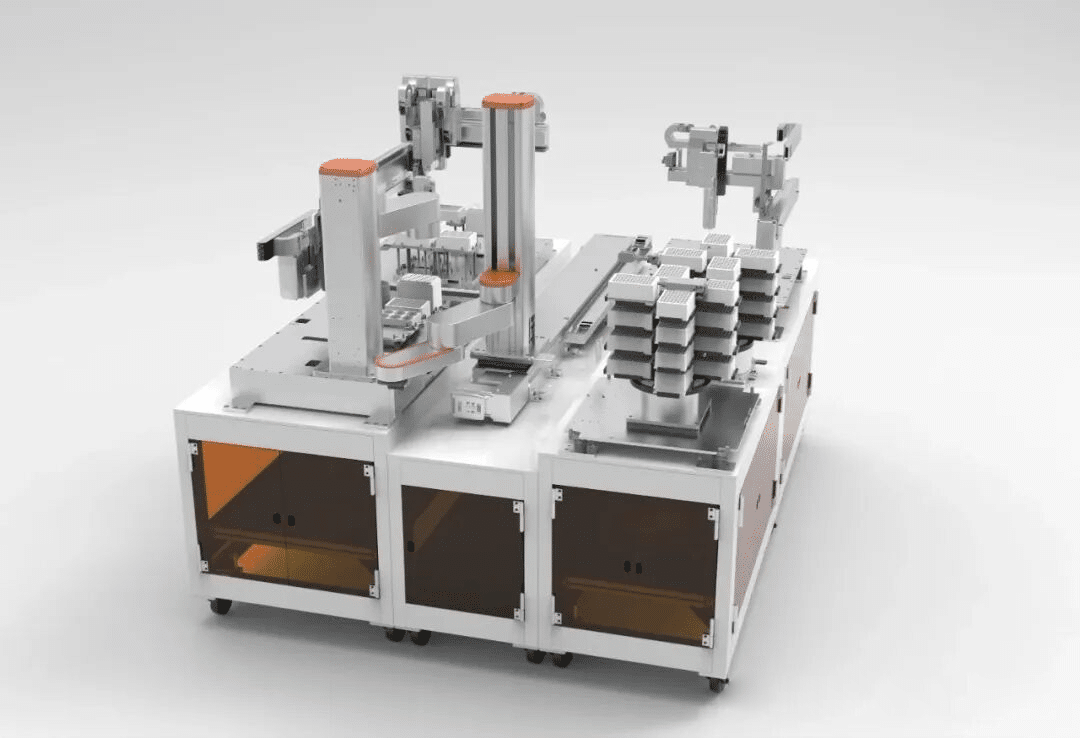
Leveraging model-driven, modular reconfiguration, and real-time feedback mechanisms, scientific laboratory agents enable experiments to move towards “system self-driving”: processes can be generated on demand, equipment can automatically coordinate, parameters can be dynamically optimized, and anomalies can self-repair. Researchers are freed from repetitive operations, allowing them to focus on the design and thinking stages that truly create scientific value.
From concept to reality, China’s scientific and technological strength is collectively shaping the future of scientific research infrastructure. The “Genesis Initiative” proposed by the United States depicts a future where AI models and intelligent agents reshape scientific laboratory research processes, and this vision is being realized ahead of schedule by Chinese technology companies. It brings not only increased efficiency but also a change in the entire scientific research paradigm—enabling scientific laboratories to possess the configurability of software, the learning ability of models, and the self-driving capabilities of intelligent agents. Hitbot believes that digitalized, model-based, and agent-based experimental infrastructure is becoming the new foundation for global life science research. An era of truly self-driving, adaptive, and sustainably evolving scientific laboratories is dawning!