
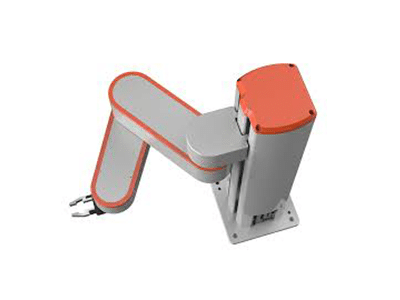
The Ultimate Guide to SCARA Robots: Traditional, Direct-Drive, and the HITBOT Innovation
Have you ever marveled at the lightning speed and pinpoint accuracy of a robot assembling a circuit board or precisely dispensing a liquid? Chances are, you were watching a SCARA robot in action. Selective Compliance Assembly Robot Arm (SCARA) robots are the unsung heroes of modern automation, mastering tasks that demand speed, precision, and repeatability.
But how does the scara robot work? And with evolving technology like direct-drive systems, what sets the latest innovations apart? This comprehensive guide will break down the mechanics of SCARA robots, explore the different types, and showcase how HITBOT is leveraging this technology to deliver superior automation solutions.
Part1: The Fundamental Genius of the SCARA Robot Design
At its core, a SCARA robot is designed to mimic the movement of a human arm, but with far greater precision and without ever getting tired. Its key characteristic is a rigid, vertically compliant structure. Let’s decode that:
Selective Compliance: This means the robot is stiff and resistant to movement in the vertical (Z-axis) direction—perfect for applying downward force for insertions or screwdriving. However, it is intentionally compliant, or slightly flexible, in the horizontal (X-Y) plane. This allows it to absorb small misalignments when inserting parts, preventing damage to components and machinery.
Assembly Robot Arm: This describes its primary purpose: to assemble parts quickly and accurately.
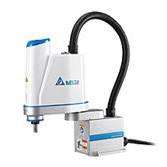
How a Traditional SCARA Robot Works: The Mechanics
A traditional SCARA robot operates on a simple yet brilliant mechanical principle with four axes of motion:
- Axis 1 (J1 – Base Rotation): The first joint is located at the base and rotates the entire arm horizontally (like a person turning at the waist).
- Axis 2 (J2 – Elbow Rotation): The second joint, connected to the first arm segment, operates like an elbow, moving the second arm segment in the horizontal plane.
- Axis 3 (J3 – Vertical Motion): The third axis is responsible for moving the entire arm assembly up and down (Z-axis). This is typically a linear prismatic joint, providing the rigid vertical motion needed for insertion tasks.
- Axis 4 (J4 – End-Effector Rotation): The fourth and final axis is at the wrist, allowing the attached end-effector (e.g., a gripper, dispenser, or screwdriver) to rotate. This provides the necessary orientation to place or manipulate a component correctly.
The coordinated movement of the first two axes (J1 and J2) positions the end-effector anywhere within its circular work envelope. Axis 3 (J3) then plunges down, and Axis 4 (J4) makes the final rotational adjustment to complete the task.
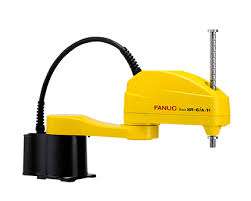
Key Advantages of the SCARA Design:
- High Speed: The rotational joints can move extremely fast, making SCARA ideal for high-throughput applications.
- Exceptional Repeatability: They excel at returning to the same precise location again and again.
- Rigidity in the Z-Axis: Perfect for downward force tasks like press-fitting and assembly.
- Compact Footprint: They occupy minimal valuable floor space on a factory bench or production line.
Part 2: The Evolution: Enter the Direct-Drive SCARA Robot
While traditional SCARAs are highly effective, they rely on a mechanical transmission system—typically belts and pulleys or gears—to transfer power from the motors to the joints. This introduces limitations:
- Backlash: Slight gaps between meshed gears can lead to tiny inaccuracies in positioning.
- Maintenance: Belts can stretch and wear out over time, requiring replacement and recalibration.
- Vibration & Noise: More moving parts can lead to higher vibration levels and operating noise.
- Limited Acceleration: The mass of the transmission system can limit how quickly the arm can start and stop.
The Direct-Drive Solution:
A direct-drive SCARA robot eliminates these transmission elements. In this design, the rotor of the motor is directly attached to the load (the robot arm), and the stator is fixed to the base or previous arm segment.
Benefits of Direct-Drive Technology:
- Supreme Precision & Accuracy: With no belts or gears to introduce backlash, positioning is incredibly accurate.
- Higher Speed & Acceleration: The reduced mass and absence of compliant transmission parts allow for faster movement and sharper stops.
- Smoother Motion: Minimal vibration results in smoother operation, which is critical for delicate tasks.
- Lower Maintenance: Fewer wearable parts mean higher reliability and reduced downtime.
- Quiet Operation: Less mechanical noise creates a better working environment.
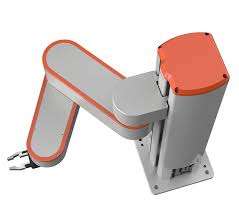
Part 3: The HITBOT SCARA Robot: Engineering the Future of Automation
At HITBOT, we don’t just manufacture robots; we engineer solutions. Our range of SCARA robots incorporates the latest technological advancements, including high-performance direct-drive models, to provide unmatched value and performance.
What Sets the HITBOT SCARA Robot Apart?
- Precision Engineering for Unmatched Accuracy:
Our robots are built with proprietary algorithms and high-resolution encoders that ensure micron-level repeatability. Whether it’s placing a microchip or dispensing a reagent, every movement is executed with flawless precision.
- Blistering Speed for Maximum Throughput:
HITBOT SCARAs are designed for speed. Optimized motion control and rigid arm structures allow for rapid pick-and-place cycles, dramatically increasing your production output and reducing cycle times.
- Seamless Integration and User-Friendly Experience:
We understand that a robot is only as good as its interface. HITBOT provides intuitive software that simplifies programming, calibration, and operation. Our robots can be easily integrated into existing production lines and communicate seamlessly with other equipment via standard protocols (EtherCAT, Modbus TCP, etc.).
- Reliability Built to Last:
Constructed from high-quality materials and subjected to rigorous testing, HITBOT robots are engineered for 24/7 operation in demanding industrial environments. Our commitment to quality ensures exceptional uptime and a long operational lifespan.
- Customization and Expert Support:
We recognize that every application is unique. HITBOT offers customization options for end-effectors, reach, and payload. Our team of automation experts provides unparalleled technical support, from the initial design phase to installation and beyond, ensuring you get the perfect solution for your needs.
HITBOT in Action: Key Applications
- High-Speed Assembly: Electronics, consumer goods, and automotive components.
- Precision Dispensing: Adhesives, sealants, and liquids in manufacturing and life sciences.
- Inspection and Testing: Handling parts for vision inspection systems.
- Machine Tending: Loading and unloading parts from CNCs, injection molding machines, and stamping presses.
Conclusion: Choosing the Right SCARA Robot for Your Needs
The SCARA robot remains a cornerstone of industrial automation. Understanding the difference between traditional and advanced direct-drive models is key to making an informed investment.
While a traditional SCARA might be sufficient for some applications, the benefits of direct-drive technology—precision, speed, and reliability—are undeniable for high-end, demanding tasks.
HITBOT stands at the intersection of this innovation. We offer the performance advantages of cutting-edge direct-drive technology combined with robust engineering, intuitive software, and exceptional support. We don’t just sell robots; we deliver measurable gains in productivity, quality, and efficiency.
Ready to see how a HITBOT SCARA robot can transform your operation? Contact us today to speak with an automation specialist and explore a tailored solution for your application.