
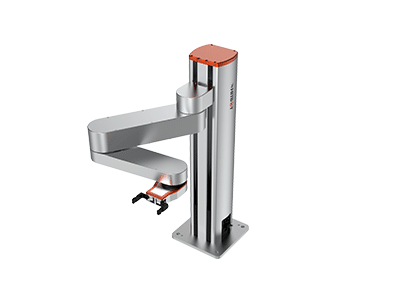
How 4-Axis SCARA Robots Are Revolutionizing Assembly Line Efficiency: Speed, Precision, and ROI
In the relentless pursuit of faster production cycles, higher quality, and lower costs, manufacturers constantly seek technologies that deliver tangible improvements. Enter the 4-axis SCARA robot (Selective Compliance Assembly Robot Arm). Once a niche player, SCARAs have become the unsung heroes of modern assembly lines, driving unprecedented gains in efficiency across countless industries. But what makes these specific robots such powerful catalysts for change? Let’s delve into how their unique design and capabilities are reshaping the landscape of automated assembly.
Understanding the SCARA Advantage: Built for Speed and Precision in the XY Plane
Unlike their more complex 6-axis cousins designed for maximum flexibility, or delta robots optimized for ultra-high-speed pick-and-place in a confined vertical space, the 4-axis SCARA excels in a specific, yet incredibly common, domain: high-speed, high-precision operations within a horizontal plane, often with critical vertical (Z-axis) motion.
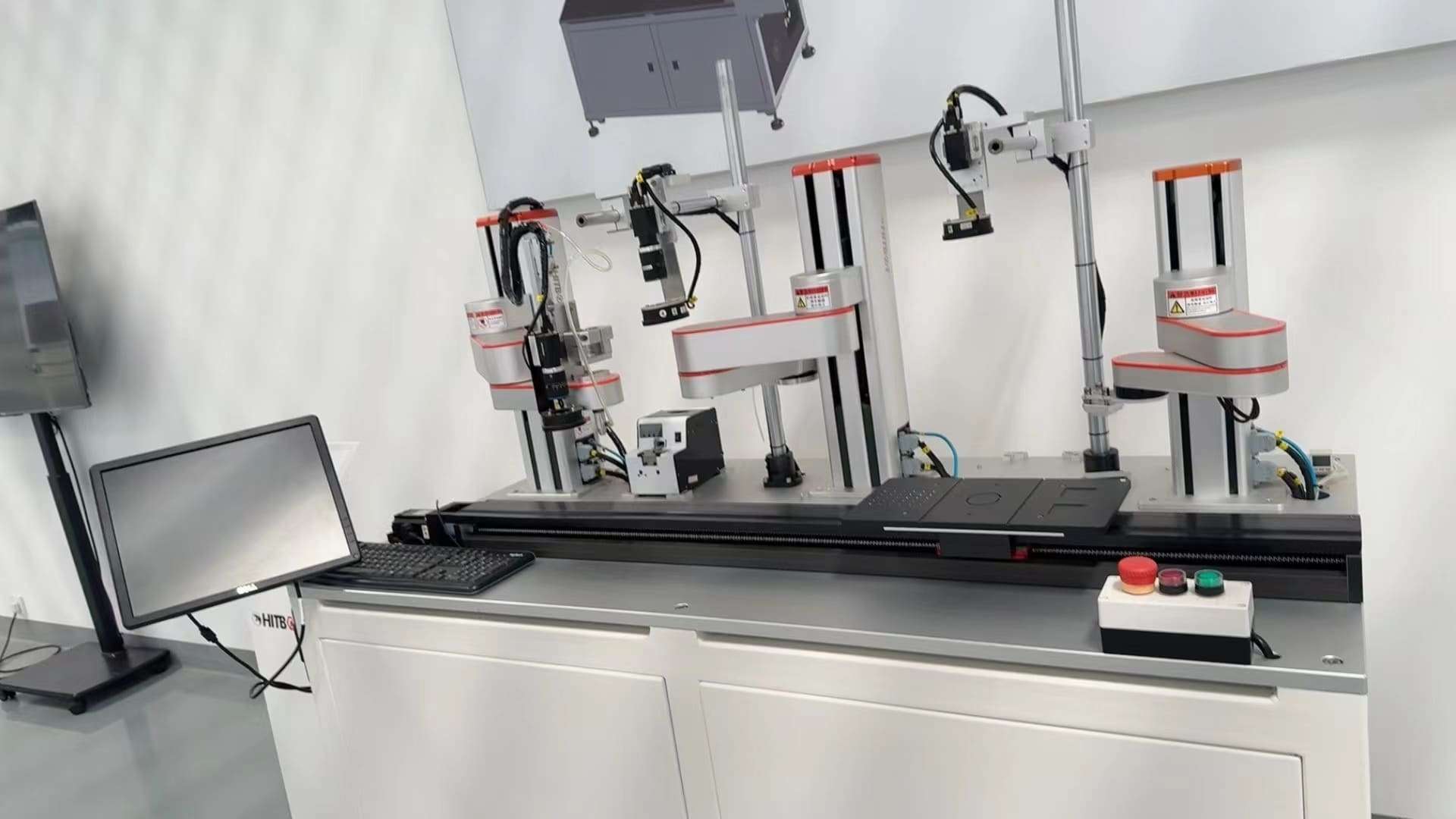
Here’s why its design is perfect for assembly tasks:
- Selective Compliance: The “SC” in SCARA is key. The arm is rigid vertically (Z-axis) but slightly compliant (flexible) in the horizontal (XY) plane. This ingenious design allows the robot to absorb minor misalignments in parts or fixtures during insertion tasks (like placing a peg in a hole). Instead of jamming or causing damage, the arm gently guides the part into place. This dramatically reduces the need for ultra-precise (and expensive) part feeding and fixturing, simplifying cell design and improving reliability.
- Four Simple Axes, Blistering Speed:
- Axis 1 & 2 (Shoulder & Elbow): Control horizontal (XY) movement. Their rotational nature allows for very fast, sweeping motions across the work envelope.
- Axis 3 (Z): Controls vertical up/down motion for picking, placing, pressing, or screwing.
- Axis 4 (Theta): Controls rotation (yaw) of the end-effector for orienting parts or tools.
This streamlined configuration minimizes moving mass and inertia compared to 6-axis arms, enabling significantly faster cycle times – often measured in fractions of a second for simple moves.
- Compact Footprint: SCARAs typically have a cylindrical work envelope, requiring less valuable floor space than larger articulated arms performing similar horizontal tasks. This allows for denser packing of workstations on the assembly line.
- High Repeatability: While not always having the absolute positioning accuracy of some high-end 6-axis arms, SCARAs boast exceptional repeatability (often ±0.01mm or better). This means they return to the exact same spot time after time, which is paramount for precision assembly operations like inserting components, applying adhesives, or driving screws.
The Efficiency Multipliers: Where SCARAs Drive Real-World Gains
So, how does this translate into tangible assembly line efficiency? SCARAs contribute across multiple dimensions:
- Dramatically Increased Throughput: This is the most obvious impact. Their unmatched speed in XY plane operations directly translates to more parts assembled per minute, per hour, and per shift. Tasks like transferring parts between conveyors, loading/unloading machines (CNC, injection molding, presses), placing components onto PCBs, or simple kitting operations see massive speed boosts. This allows lines to run faster or handle increased volumes without adding parallel manual stations.
- Enhanced Quality & Consistency: Human fatigue leads to errors. Repetitive tasks lead to inconsistencies. SCARAs eliminate this:
- Precise Force Control: Integrated force sensors allow SCARAs to perform delicate insertions or apply consistent pressure during pressing or screw driving operations, ensuring perfect fit and avoiding damage.
- Perfect Repeatability: Every part is placed or assembled in exactly the same position, with the same orientation, using the same force. This minimizes defects and rework, leading to higher overall product quality and lower scrap rates.
- Consistent Process Execution: Whether applying dots of adhesive, dispensing sealant, or performing ultrasonic welding, SCARAs execute the programmed path with unwavering precision.
- Reduced Labor Costs & Mitigated Shortages: Automating repetitive, high-volume assembly tasks with SCARAs frees human workers for higher-value roles requiring judgment, problem-solving, quality control, or complex manual assembly that robots still struggle with. This optimizes labor utilization and helps manufacturers cope with persistent labor shortages in many regions.
- Improved Worker Ergonomics & Safety: Removing humans from monotonous, fast-paced tasks reduces the risk of repetitive strain injuries (RSIs). SCARAs also handle tasks involving small, sharp components, hazardous materials (like adhesives or solvents dispensed in controlled environments), or operations near moving machinery, enhancing overall shop floor safety.
- Optimized Floor Space Utilization: Their compact size allows manufacturers to pack more functionality into existing assembly lines or design new, denser lines. SCARAs can often be mounted overhead, on walls, or even directly on moving platforms (like AGVs/AMRs), further maximizing space efficiency.
- Reduced Work-in-Progress (WIP): Faster cycle times mean parts move through the assembly process quicker, minimizing queues and bottlenecks at downstream stations. This leads to shorter overall production lead times.
- Lower Total Cost of Ownership (TCO) & Faster ROI: Compared to many 6-axis solutions, SCARAs often have:
- Lower Initial Purchase Price: Simpler mechanics translate to lower cost.
- Simpler Programming & Integration: Their motion is often easier to visualize and program, especially for Cartesian-like tasks. Many offer intuitive teach pendants or graphical interfaces.
- Reduced Maintenance: Fewer complex joints generally mean lower long-term maintenance costs.
Combined with their speed and reliability, this typically results in a faster return on investment (ROI) for assembly tasks within their capabilities.
Real-World Applications: SCARAs in Action
The versatility of 4-axis SCARAs makes them ubiquitous in modern assembly. Here are just a few examples:
Electronics Manufacturing:
- High-speed placement of connectors, capacitors, resistors, and other components onto PCBs before soldering.
- Precision insertion of delicate pins or sockets.
- Loading/unloading PCBs into testers, screen printers, or reflow ovens.
- Applying conformal coating or solder paste.
- Assembling small electronic devices (cameras, sensors, wearables).
Automotive & Tier Suppliers:
- Assembling small motors, pumps, and actuators (gear meshing, shaft insertion, spring placement).
- Installing fasteners (screws, rivets, clips).
- Applying gaskets, sealants, or adhesives.
- Precision assembly of fuel injectors, sensors, and valve bodies.
- Loading/unloading parts into machining centers or presses.
Medical Device Assembly:
- Assembling intricate components of syringes, inhalers, IV sets, and diagnostic devices where precision and cleanliness are paramount.
- Handling and placing small, delicate parts under microscopes.
- Applying precise amounts of biocompatible adhesives.
- Packaging sterile medical products.
Consumer Goods & Packaging:
- Assembling small appliances, power tools, and toys.
- Kitting components into boxes or trays.
- Precision filling and capping of small bottles or tubes.
- Placing items into blister packs or clamshells.
- Label application.
General Manufacturing:
- Screw driving (especially small screws).
- Precision gluing, sealing, and dispensing.
- Sorting and transferring parts between processes.
- Simple machine tending (CNC, injection molding, stamping).
Choosing the Right Tool: SCARA vs. Alternatives
SCARAs aren’t the answer for every assembly task. Understanding their strengths relative to alternatives is crucial:
| Robot Type | Best Suited For | Key Advantage | Limitation |
| 4-Axis SCARA | High-speed XY plane tasks, insertions, Z-axis work | Speed + Selective Compliance | Limited reach below base, no complex 3D paths |
| 6-Axis Articulated | Complex 3D paths, multi-angle access, dexterity | Maximum Flexibility & Reach | Slower cycle times, higher cost/complexity |
| Delta Robot | Ultra-high-speed pick-and-place in small area | Extreme Speed (Short Distances) | Limited Z-stroke, payload, complex kinematics |
| Cartesian/Gantry | Heavy payloads, large work areas, linear paths | High Payload, Large Envelope, Simplicity | Slower speeds, less dynamic motion |
The Future of SCARA: Smarter, More Collaborative, More Accessible
SCARA technology continues to evolve, further boosting assembly efficiency:
- Enhanced Vision & AI: Integrated smart cameras and AI allow SCARAs to handle greater part variability, perform in-process quality checks (e.g., verifying component presence or orientation), and adapt paths in real-time. Machine learning optimizes motion paths for even faster cycles.
- Improved Force Sensing & Control: More sophisticated force feedback enables even more delicate and complex assembly operations, like meshing gears with varying tolerances or assembling components with snap fits.
- Collaborative Features: While traditionally caged for safety due to high speeds, newer SCARAs incorporate safety-rated monitored stops, speed and separation monitoring, and power/force limiting to enable safer operation alongside humans in specific scenarios (“cobots” are influencing SCARA design).
- Easier Programming & Integration: Drag-and-drop programming, no-code interfaces, and better simulation tools are lowering the barrier to entry, making SCARA automation accessible to smaller manufacturers.
- Cloud Connectivity & Data Analytics: SCARAs are becoming data sources, providing insights into cycle times, uptime/downtime, error rates, and predictive maintenance needs, enabling continuous process optimization.
Conclusion: The Indispensable Engine of Modern Assembly
The 4-axis SCARA robot is far more than just another automation component. It is a fundamental driver of assembly line efficiency in the 21st century. By delivering unmatched speed and precision in the horizontal plane, coupled with reliable vertical motion and selective compliance, SCARAs directly address core manufacturing challenges: increasing throughput, enhancing quality, reducing costs, and optimizing labor.
They excel in the high-volume, repetitive, precision tasks that define much of modern assembly work, offering a compelling combination of performance, reliability, and value. As they become smarter, more collaborative, and easier to deploy, their role will only expand.
For manufacturers looking to stay competitive, ignoring the potential of SCARA automation is no longer an option. Understanding their capabilities and strategically implementing them where they deliver the highest impact – particularly in high-speed pick-and-place, precision insertion, screw driving, and dispensing within constrained horizontal workspaces – is key to unlocking the next level of assembly line efficiency and achieving sustainable manufacturing excellence. The revolution is happening one fast, precise, compliant move at a time.
Ready to explore how 4-axis SCARA robots can transform your assembly line efficiency? Hitbot specializes in designing and integrating high-performance robotic automation solutions. Contact us today for a consultation and discover your potential for speed, precision, and ROI!