
What’s the Feature of Dexterous Hands?
Beyond Grippers: The Astonishing Capabilities of Modern Dexterous Hands
For decades, the image of a robot hand in popular imagination was often a crude clamp or a simple two-fingered gripper – functional for brute tasks, but utterly lacking in finesse. Today, however, the field of robotics has undergone a quiet revolution, giving rise to truly dexterous hands. These marvels of engineering are no longer science fiction; they are sophisticated systems pushing the boundaries of what machines can physically manipulate, bringing unprecedented levels of adaptability and precision to automation. Let’s delve into the defining feature of dexterous hands that set these advanced manipulators apart.
-
Multi-Articulated Fingers: The Foundation of Flexibility
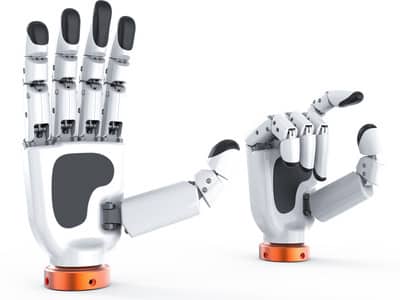
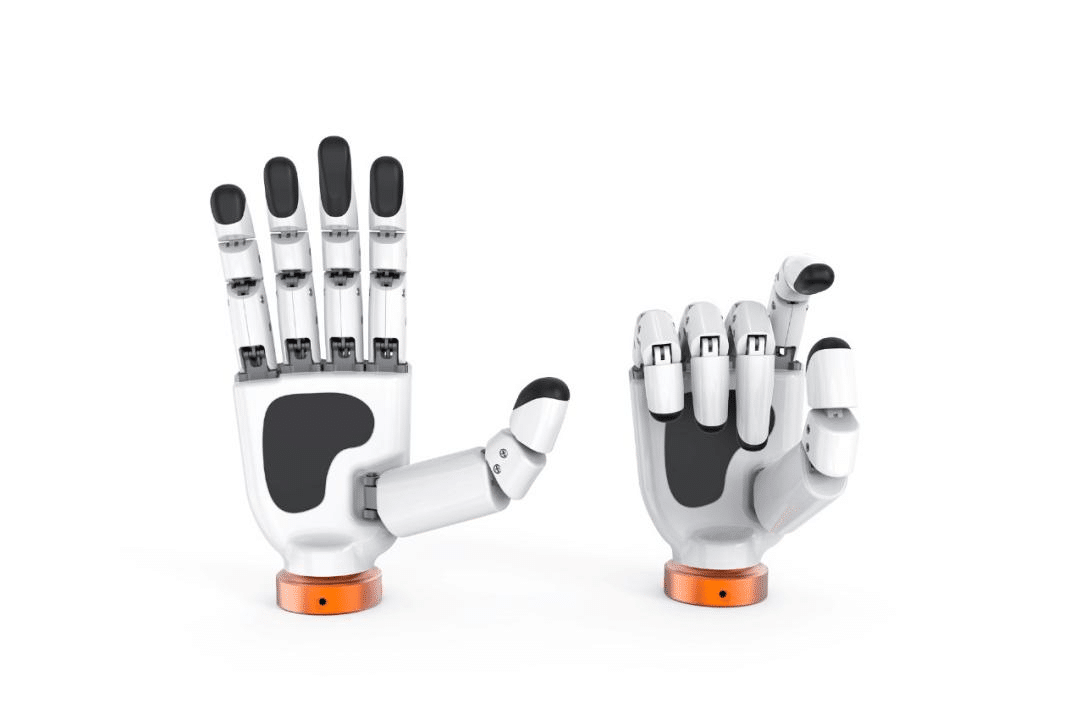
The core feature enabling dexterity is complex articulation. Unlike simple grippers, dexterous hands possess multiple fingers (typically 3, 4, or 5), each containing several independently controllable joints – mimicking the phalanges of a human hand. This high number of Degrees of Freedom (DoF) – often ranging from 12 to over 20 – allows for an immense variety of intricate poses and movements. Fingers can curl around objects, oppose each other precisely, make delicate pinches, or spread wide for stability. This articulation is fundamental for in-hand manipulation – the ability to reposition or reorient an object without releasing it, a skill crucial for complex assembly tasks or handling irregular items.
-
Sensing the World: Tactile Intelligence
Dexterity isn’t just about movement; it’s about interaction. Advanced dexterous hands are equipped with sophisticated sensory suites that provide critical real-time feedback:
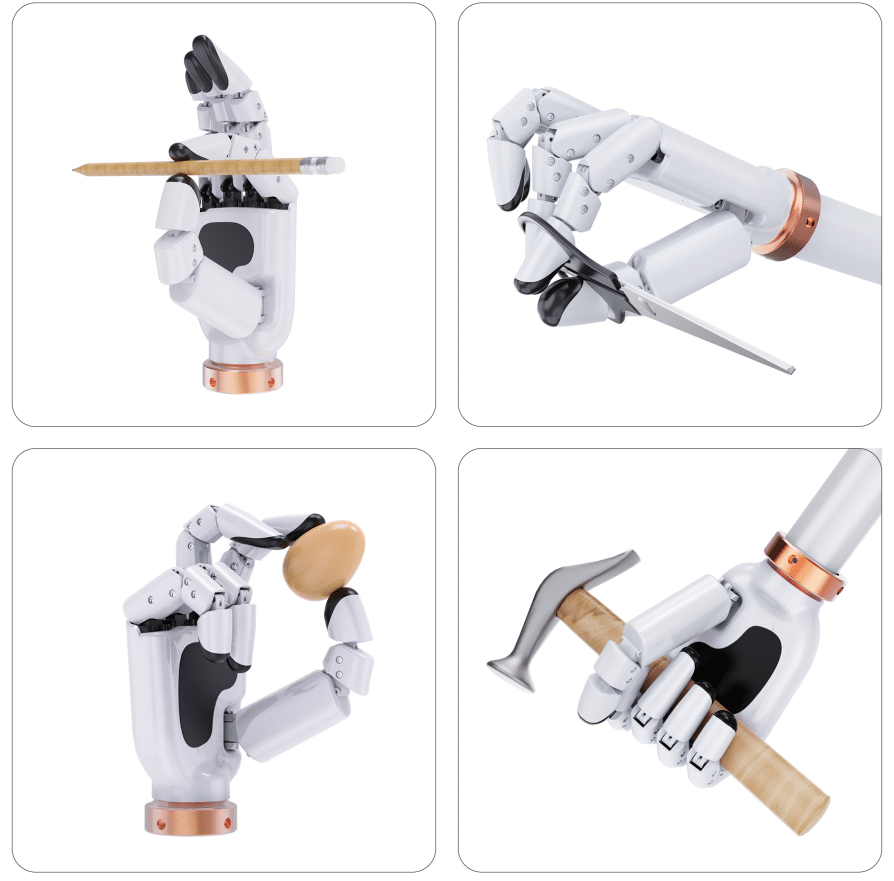
- Tactile Sensing: High-resolution sensor arrays embedded in the fingertips and palm detect pressure, force distribution, vibration, and even shear forces. This allows the hand to “feel” an object’s shape, texture, weight distribution, and slip – enabling it to grasp fragile items like an egg or a lightbulb without crushing them, or securely hold a slippery tool.
- Proprioception: Sensors within the joints provide precise feedback on their angles and positions. This internal sense allows the hand to know exactly how its fingers are configured without relying solely on external vision, essential for precise control in cluttered environments or when objects partially occlude the view.
- Force/Torque Sensing: Often integrated at the wrist or within finger joints, these sensors measure the forces and torques being applied during manipulation. This is vital for tasks requiring controlled insertion (like plugging in a USB), collaborative work with humans, or applying just the right amount of pressure.
-
Adaptive Grasping & Shape Conformation
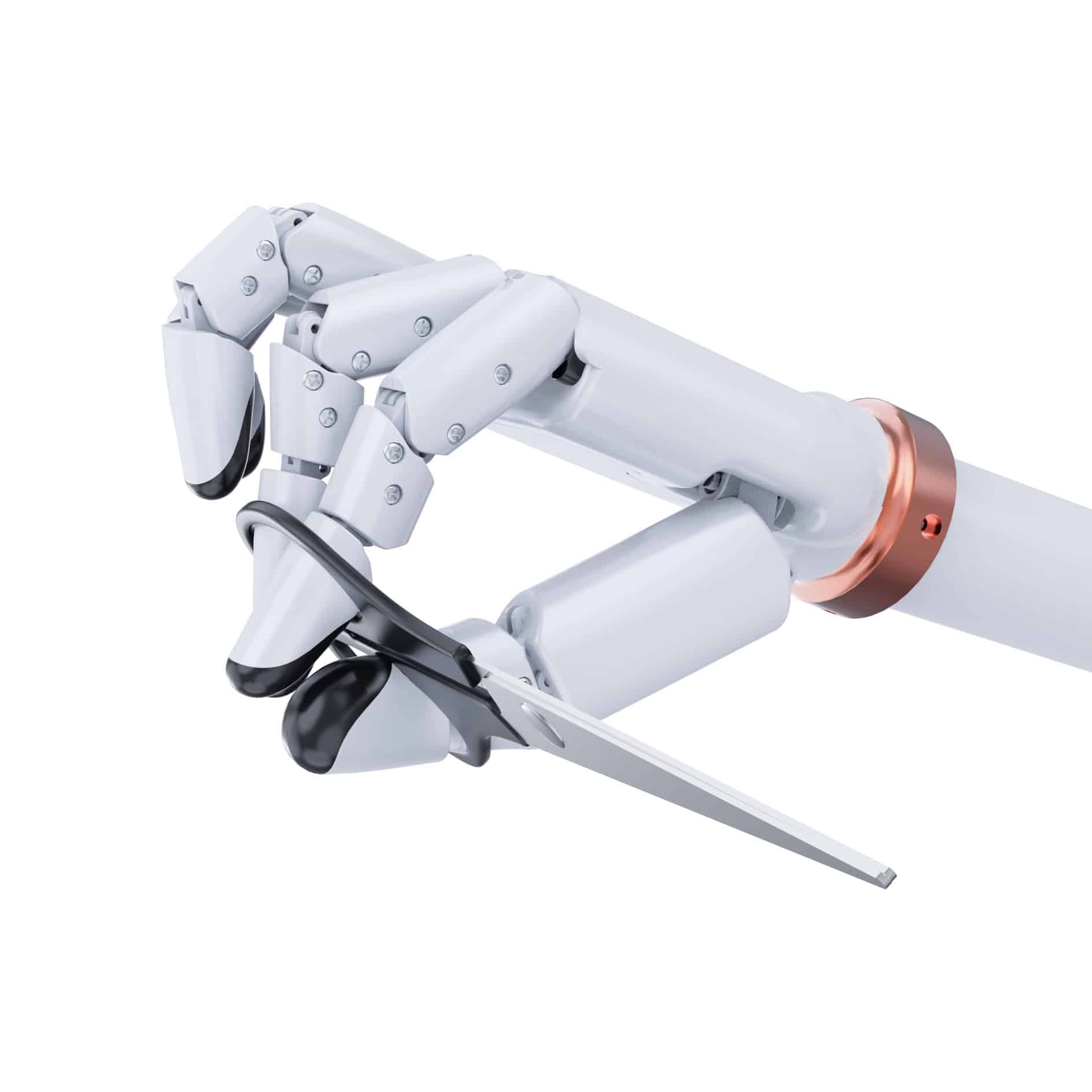
Dexterous hands excel at adaptive grasping. Instead of requiring pre-programmed poses for specific objects, they can dynamically adjust their grasp based on sensory input and the object’s unique geometry. Upon contact, tactile and force feedback inform the control system, allowing fingers to automatically conform to irregular shapes – wrapping around a hammer handle, cradling a piece of fruit, or securely gripping a component with complex contours. This inherent adaptability makes them incredibly versatile across diverse tasks without needing constant re-tooling.
-
Precision and Delicate Force Control
The combination of fine motor control (enabled by high-quality actuators like advanced electric motors or pneumatic systems) and rich sensory feedback allows for exceptional precision and delicate force modulation. A dexterous hand can perform tasks requiring minute adjustments, such as threading a needle (a significant challenge in robotics), inserting a small electronic component into a circuit board, turning a tiny knob, or gently wiping a surface. The ability to apply exactly the right amount of force – from a feather-light touch to a firm, secure hold – is paramount for handling a wide spectrum of materials and tasks safely and effectively.
-
Integration with Perception and Intelligence
A dexterous hand is rarely an island. Its true power is unleashed when tightly integrated with:
- Advanced Vision Systems: Cameras (2D and 3D) provide object recognition, pose estimation, and tracking, guiding the hand towards targets and informing initial grasp planning.
- Sophisticated AI & Control Algorithms: The complex sensorimotor loop – processing sensory input (touch, vision, proprioception) and generating appropriate motor commands in real-time – requires powerful AI. Machine learning, particularly reinforcement learning and imitation learning, is increasingly used to train control policies that enable complex, adaptive, and robust manipulation skills. This intelligence allows the hand to react to uncertainties, recover from slips, and learn new tasks.
-
Versatility Across Domains
The features above translate into unprecedented versatility. Dexterous hands are finding applications far beyond traditional factory assembly lines:
- Logistics & Warehousing: Handling diverse, unstructured items (e.g., groceries, apparel) for picking and packing, depalletizing irregular loads.
- Laboratory Automation: Performing delicate experiments, pipetting, handling test tubes and petri dishes.
- Healthcare & Surgery: Assisting in complex minimally invasive surgeries (teleoperation), rehabilitation robotics, handling sensitive medical instruments.
- Agriculture: Harvesting delicate fruits and vegetables without bruising.
- Service Robotics: Setting tables, preparing food, assisting in household tasks, elder care support.
- Dangerous Environments: Handling hazardous materials, defusing explosives, disaster response.
The Future in Their Grasp
Dexterous robotic hands represent a significant leap towards robots that can interact with the physical world with human-like adaptability and finesse. The convergence of advanced mechanics, rich sensing, and powerful AI is dissolving the barriers that confined robots to repetitive, structured tasks. As these technologies continue to mature – becoming more robust, affordable, and capable – we can expect dexterous hands to become ubiquitous, transforming industries, augmenting human capabilities, and tackling challenges in environments previously inaccessible to automation. They are not just tools; they are the enabling technology for a new era of robotic interaction with our complex, unstructured world. The future isn’t just automated; it’s being deftly held, manipulated, and shaped by these remarkable machines.