
Beyond the Hype: 8 Robotics Predictions for a Pragmatic 2026
If 2025 was the year of “Wow” in robotics—defined by viral humanoid videos and record-breaking venture checks—then 2026 is shaping up to be the year of “Show Me.”
After a year of explosive interest in Embodied AI, the industry is facing a reality check. The low-hanging fruit of e-commerce sortation has been picked. Industrial robot sales have largely stagnated since 2021, and China still accounts for the lion’s share of global installations. The conversation is shifting from what robots could do to what they should do.
Here are my top 8 robotics predictions for how the robotics industry will navigate this shift toward pragmatism, economics, and resilience in 2026.
-
Manufacturing Retakes the Throne
For the last decade, logistics and warehouse automation stole the spotlight. In 2026, manufacturing will reassert itself as the primary driver of automation. With skilled labor shortages hitting shop floors hard and the complexity of products increasing, we will see a surge in collaborative assembly robots. Unlike the rigid industrial arms of the past, these new systems leverage better sensors and AI to work alongside humans in high-mix, low-volume environments. The factory floor, not the warehouse aisle, will be the new epicenter of robotics innovation.
-
The Great Supply Chain Divergence
The era of the single, global supply chain is ending. In 2026, we will see a distinct “split” in robotics supply chains. One track will continue to service the high-volume, cost-sensitive market in China and emerging Asia. The other track will focus on “resilience sourcing” for Western markets. Component manufacturers will increasingly advertise not just on cost, but on geographic origin and security of supply. This decoupling will lead to the emergence of parallel robotics ecosystems, each with its own standards and protocols.
-
Robots-as-a-Service (RaaS) Hits the Mainstream
High CapEx costs remain the biggest barrier to entry for small and mid-sized enterprises (SMEs). In 2026, RaaS will move from a niche financing gimmick to a standard operating model. We will see the rise of specialized insurers and financiers who understand robot depreciation and residual value. This “ops-expense” model allows manufacturers to deploy fleets of robots without board-level CapEx freezes, making automation accessible to companies that previously couldn’t stomach the upfront risk.
-
Lights-Out Warehousing (The Lite Version)
Fully “lights-out” warehouses—facilities operating 24/7 with zero humans—have been a promise for a decade. In 2026, we will finally see them at scale, but with an asterisk. Instead of massive, greenfield sites built from scratch, we will see “lights-out zones” within existing facilities. Dark corridors where autonomous forklifts and mobile robots operate at night, handing off work to human teams during the day. It won’t be a binary switch, but a hybrid model that proves the ROI of darkness.
-
The Humanoid Reality Check
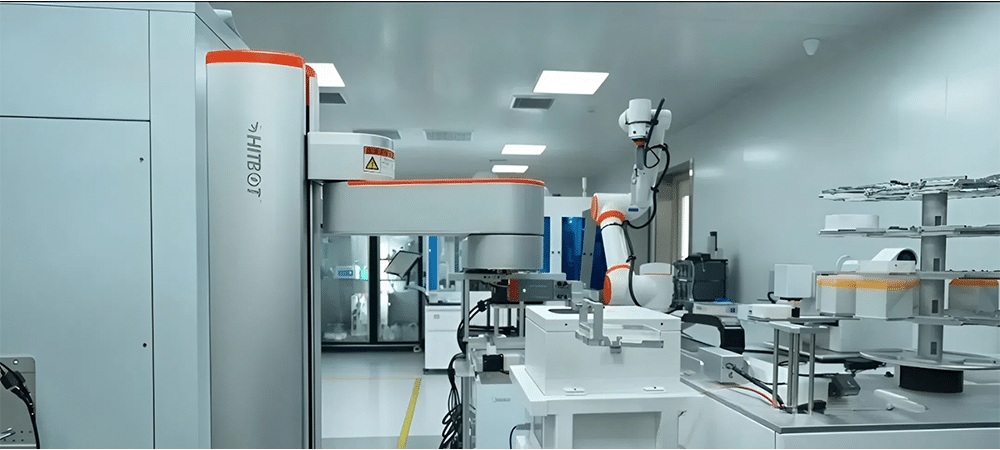
Humanoids will continue to dominate tech headlines, but 2026 will be the year the hype curve meets the data curve. Deployments will remain strictly limited to highly controlled pilot programs in automotive and manufacturing mega-factories. The “general purpose” promise remains a decade away. However, the component technology developed for humanoids—particularly dexterous hands and balancing algorithms—will trickle down into more practical industrial applications, making existing robots far more capable.
-
The Micro-Fulfillment Renaissance
We were too hasty in writing off micro-fulfillment. The first wave failed because the technology wasn’t dense enough to justify the real estate costs. In 2026, advances in vertical lift modules and dense storage retrieval systems will make neighborhood-scale fulfillment centers viable again. As same-hour delivery expectations spread beyond dense urban cores, retailers will look to convert empty big-box store backrooms into automated local hubs.
-
The Rise of the “Data Moat”
Hardware is becoming a commodity; data is the new differentiator. In 2026, robotics companies will stop selling just robots and start selling the data those robots generate. By capturing real-time data on throughput, defects, and material flow, robot vendors will offer “process optimization” as a service. The value proposition shifts from “Buy this arm to pick 1,000 units an hour” to “Buy our ecosystem to understand why your line stops at 2:00 PM every Tuesday.”
8 . Software-Defined Hardware Updates
Inspired by the electric vehicle industry, robot manufacturers will finally embrace the “software-defined” model. In 2026, purchasing a robot will feel more like buying a smartphone. You will buy a base hardware platform with a guaranteed lifespan, and then unlock new capabilities and skills via over-the-air software updates. This extends the useful life of the hardware and allows fleet managers to adapt to new tasks without ripping and replacing expensive iron.
Summary: The Pragmatist’s Payoff
Taken together, these trends point to a more mature, economically driven robotics landscape. The era of chasing science projects is fading. In its place, we are entering the era of the operator—where the winners aren’t necessarily the ones with the most advanced prototype, but the ones who deploy robots today, capture the data, learn relentlessly, and scale what actually moves the bottom line. 2026 won’t be about the future of robotics; it will be about the robotics of the future, working right now.