
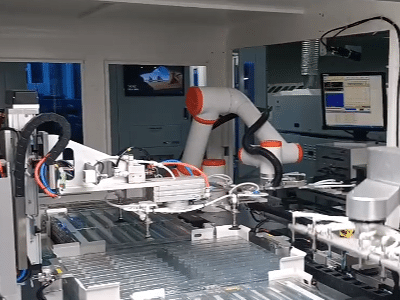
6-Axis Collaborative Robots: Revolutionizing Automation in the Manufacturing Industry
Imagine walking into a factory where robots and humans work side-by-side – no safety cages, no complex programming barriers, just seamless teamwork. This isn’t sci-fi; it’s today’s reality with 6-axis collaborative robots (cobots). By 2026, the cobot market will hit $8 billion (Interact Analysis), and here’s why manufacturers are racing to adopt them.
Why Traditional Automation is Hitting a Wall?
For decades, factories relied on two extremes:
– Rigid industrial robots: High-speed but confined to cages, needing $50k+ integration
– Manual labor: Flexible but inconsistent, with rising costs (US manufacturing wages up 18% since 2020)
The result? A productivity crisis: 77% of manufacturers struggle to scale high-mix, low-volume production (McKinsey). Enter 6-axis cobots – designed to bridge the gap.
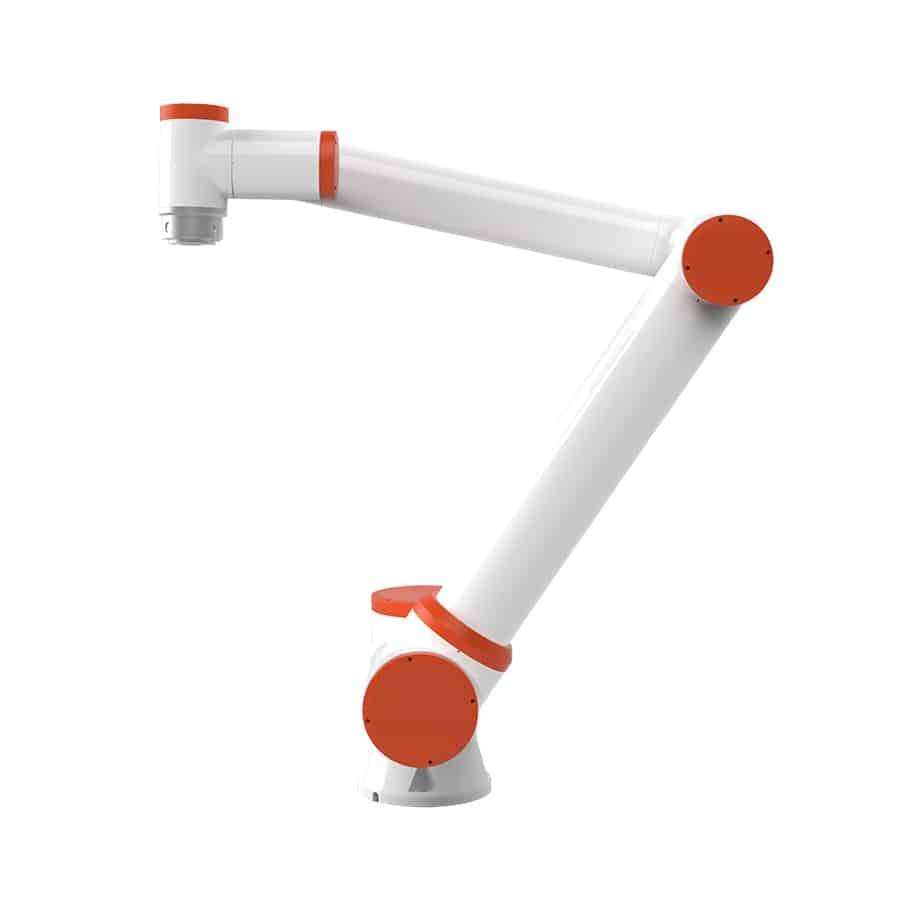
The Game-Changing Anatomy of 6-axis collaborative robots
Unlike 4-axis SCARAs (limited to planar tasks), these machines mimic human arm dexterity:
| Joint Movement | Capability Impact | Real-World Use Case |
|——————-|———————-|————————|
| 6 rotational axes | 360° spatial flexibility | Reaching behind objects in tight spaces |
| ±0.02mm repeatability | Micron-level precision | Inserting micro USB ports in electronics |
| Force-torque sensors | Collision detection (<150ms response) | Safe contact during medical device polishing |
> Example: Delta Electronics deployed 6-axis cobots for PCB testing, reducing human error by 92% while cutting test cycle time from 8 minutes to 3.5 minutes.
3 Industries Winning with Cobot Automation
🔧 1. Automotive: Solving the “Mixed-Model” Nightmare
When Ford needs to switch between EV battery and engine assembly lines:
– Traditional robots: Require 3-day reprogramming + physical recalibration
– Cobot solution: Vision-guided path teaching (<1 hour) using hand-guiding
Result: 40% faster changeovers with zero coding – crucial as EV models proliferate.
💊 2. Pharmaceuticals: Where Compliance is Non-Negotiable
Sanofi’s vaccine packaging line demands:
– ISO Class 5 cleanroom certification
– Full process traceability
– Zero particulate contamination
Cobot fix:
– Ceramic-coated joints (no lubricant shedding)
– Built-in data logs tracking every torque/position value
– Quick-swap electric grippers for sterile handling
Outcome: Passed FDA audits with 99.98% batch consistency.
📦 3. E-Commerce Fulfillment: Taming the SKU Explosion
Amazon’s challenge: Handle 10,000+ product shapes daily.
– Human pickers: Average 100 items/hour with 5% error rate
– Cobot + AI vision:
– 3D scanning identifies object dimensions in 0.8s
– Adaptive gripping force (0.1-20N) handles foam cups to steel tools
– Integrates with WMS for real-time order prioritization
Impact: 300 picks/hour at 99.4% accuracy – vital during peak sales.
Busting 4 Major Cobot Myths
- ❌ “They’re too slow for production lines”
Truth: Modern cobots like Doosan H-Series hit 4m/s speeds – rivaling traditional arms.
- ❌ “Programming requires PhDs”
Truth: Drag-and-teach interfaces let operators train tasks in <15 mins.
- ❌ “Safety standards limit payloads”
Reality: ISO/TS 15066-certified cobots now handle 35kg (e.g., Yaskawa HC30).
- ❌ “ROI takes years”
Data: Typical payback in 8-14 months via 24/7 operation + reduced scrap (A3 Automation Report).
Your Cobot Implementation Roadmap
Follow these steps to avoid costly mistakes:
Phase 1: Task Audit
Identify “cobot-ready” processes:
✅ Repetitive motions (screwing, polishing)
✅ Low-variability inspection
✅ Light payload handling (<15kg)
Phase 2: Pilot Testing
– Rent a cobot for $15/day (e.g., Hirebotics)
– Validate performance with real-world trials:
plaintext
Test Case: 200-cycle material handling
Metric | Target | Actual
—————-|———-|———
Position error | <±0.1mm | ±0.03mm
Cycle time | ≤25s | 22.8s
Energy use | <0.5kWh | 0.38kWh
Phase 3: Full Integration
– Choose peripheral ecosystems:
– Electric Grippers: Force-controlled for fragile items
– Mobile Platforms: For multi-station tasks
– Cloud Monitoring: Track OEE via apps like Universal Robots+
The Future is Collaborative
With advancements in:
– AI vision: Real-time defect detection (<0.1mm accuracy)
– Edge computing: On-robot path optimization
– 5G connectivity: 1ms latency for swarm coordination
Cobots will soon become every technician’s “smart colleague”. As BMW’s production chief notes: “Our cobots aren’t replacing workers – they’re making them 10x more valuable.”
As we look to the future, cobots(6-axis collaborative robots) will continue to be a driving force in reshaping the manufacturing landscape. With advancements in AI, machine learning, and sensor technologies, cobots will become even more intelligent, adaptable, and capable of handling increasingly complex tasks. Their integration with IoT and smart factories will enable real-time data analysis, predictive maintenance, and even more seamless collaboration between humans and machines. As these collaborative robots become more accessible and cost-effective, they will empower businesses of all sizes to innovate, streamline operations, and maintain a competitive edge in an ever-evolving market. The future of manufacturing is undoubtedly collaborative, and cobots will be at the heart of this transformation.